+1 (917) 565-8527

 info@indeedseo.com


Yes, YouTube is social media. Although it is primarily known as a video-sharing platform, YouTube has essential social media features, including user-generated content, comments, likes, shares, subscriptions, community posts, and live interactions. These features allow users to communicate, build communities, and engage with creators and brands.
However, YouTube is more than just a social media platform. It also functions as a video search engine, entertainment destination, educational resource, and digital marketing channel.
This combination makes YouTube different from traditional social networks such as Facebook and Instagram.
So, why is YouTube considered social media, and how does it fit into the broader social media landscape?
In this guide, we’ll explore what makes YouTube a social media platform, how it compares with other social networks, and how businesses can use it to build awareness, engage audiences, and support their marketing goals.
What Is Social Media?

Social media refers to digital platforms that allow people to create, publish, share, and interact with content while connecting with other users.
Unlike traditional media, where communication generally moves from publishers to audiences, social media encourages participation and conversations.
Users can contribute their own content, respond to others, form communities, and share information across networks.
Common examples include Facebook, Instagram, LinkedIn, TikTok, Pinterest, and YouTube.
Key Characteristics of Social Media Platforms

Most social media platforms share several important characteristics.
User-generated content: Users can publish their own videos, images, text, or other material instead of consuming content exclusively from professional publishers.
Social interaction: Features such as comments, likes, shares, and replies allow users to communicate with creators and other audience members.
Community building: Users can connect around shared interests, creators, topics, and brands.
Content discovery: Recommendation systems, search functions, hashtags, and feeds help people find relevant content.
Content sharing: Users can distribute content to other people and communities, helping information travel beyond its original audience.
Creator and business participation: Individuals, creators, and organizations can establish an online presence, communicate with audiences, and develop relationships.
YouTube meets these characteristics, which is why it is widely classified as a social media platform.
Is YouTube a Social Media Platform?
Yes, YouTube is a social media platform because it enables content creation, sharing, interaction, and community participation.
Users can upload videos, follow channels, comment on content, participate in live chats, and communicate with creators.
These activities go beyond simply watching videos.
For example, a fitness creator might upload a workout tutorial. Viewers can watch it, ask questions in the comments, subscribe to the channel, share the tutorial, and participate in future live streams.
The creator can then respond to viewers and use their feedback to develop additional content.
This exchange illustrates an essential feature of social media: two-way interaction between publishers and audiences.
YouTube may be video-first, but the relationships and communities built around its content make it a social platform.
Why Is YouTube Considered Social Media? 7 Key Reasons
YouTube shares several important features with traditional social networking platforms.
1. YouTube Allows User-Generated Content
One of the defining characteristics of social media is the ability for users to create and publish content.
YouTube enables individuals, businesses, educators, and organizations to upload original videos and share them with audiences.
Content can include:
- Educational tutorials and how-to guides
- Product reviews and demonstrations
- Entertainment and lifestyle videos
- Interviews and podcasts
- YouTube Shorts
- Live streams and event coverage
- Business announcements and brand stories
People do not need to be professional broadcasters to publish videos.
This open participation is a major reason YouTube qualifies as social media.
2. Users Can Like, Comment, and Share Videos
YouTube offers interaction features similar to other social networks.
Viewers can like videos, leave comments, reply to discussions, and share content with others.
These interactions allow audiences to express opinions, ask questions, and participate in conversations.
For businesses, comments can also provide useful feedback about products, services, and customer interests.
For instance, a software company publishing a product tutorial may receive questions about features or troubleshooting. Responding to those questions can help customers while showing that the company values audience feedback.
3. YouTube Supports Community Building
YouTube allows creators and businesses to develop communities around their channels.
Users can subscribe to channels to follow new content, while eligible creators can use posts, polls, and other community features to communicate with audiences.
Live chats and channel memberships can provide additional opportunities for participation.
Over time, regular interaction can help viewers feel connected to a creator or brand.
This community-building element is one of the clearest similarities between YouTube and traditional social media.
4. YouTube Has a Personalized Content Feed
Social media platforms typically help users discover content according to their interests and activity.
YouTube uses recommendation systems to suggest videos and channels that viewers may find relevant.
Recommendations can appear on the Home page, alongside videos, and in other discovery experiences.
This means people can discover new creators even when they are not actively searching for a particular topic.
Like other social platforms, YouTube supports both intentional content discovery and recommendations based on user interests.
5. YouTube Encourages Content Sharing
YouTube videos can be shared through messaging applications, websites, blogs, and other social networks.
Users can also embed eligible videos on webpages.
For example, a company might publish a product demonstration on YouTube, embed it on a product page, and share it through email or other social channels.
This makes YouTube useful for distributing information across multiple digital touchpoints.
6. YouTube Supports Live Social Interaction
YouTube Live allows creators to broadcast videos while viewers participate through live chat and other available interaction features.
Live interactions are particularly valuable for events such as:
- Product launches
- Question-and-answer sessions
- Educational webinars
- Gaming streams
- Interviews
- Community discussions
These experiences allow audiences to participate while content is being presented.
7. YouTube Enables Brand and Creator Relationships
Businesses can use YouTube to showcase their expertise, introduce products, answer customer questions, and communicate their brand identity.
Creators can similarly build relationships with audiences through consistent content and interaction.
This combination of content distribution and relationship development is central to social media marketing.
Is YouTube a Search Engine or Social Media?
YouTube is both a social media platform and a video search engine.
As a social media platform, it allows users to create content, interact, subscribe, share videos, and build communities.
As a search platform, it allows users to enter queries and discover relevant videos.
For example, someone searching for “how to install WordPress” may find instructional videos through YouTube Search.
Another person might discover the same tutorial through a recommendation on their Home page.
Both discovery paths can bring viewers to the content, but they work differently.
| Feature | YouTube as social media | YouTube as a search platform |
|---|---|---|
| Main purpose | Sharing and interacting with videos | Finding relevant video content |
| User activity | Likes, comments, subscriptions, discussions | Entering queries and selecting results |
| Discovery | Recommendations, subscriptions, sharing | Keyword-based video searches |
| Audience behavior | Exploring interests and following creators | Seeking answers or specific videos |
| Business opportunity | Engagement and community development | Visibility for relevant video searches |
YouTube is owned by Google, but YouTube Search and Google Search are distinct discovery systems.
Optimizing a video for YouTube does not guarantee that it will rank in Google Search, and appearing prominently in Google does not automatically mean the video will perform well on YouTube.
A successful strategy considers both search intent and audience engagement.
What Type of Social Media Is YouTube?
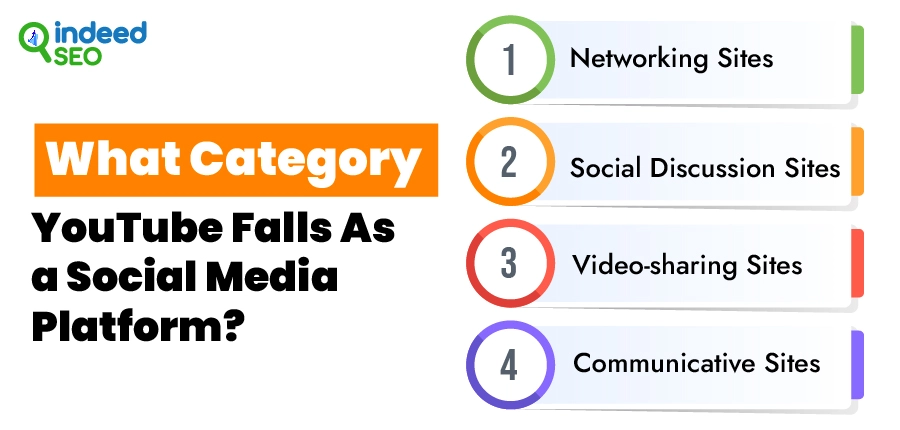
YouTube is primarily classified as a video-sharing social media platform.
Unlike social networks that emphasize text posts, professional connections, or image sharing, YouTube focuses on video-based content.
However, it also overlaps with several other categories.
Video-Sharing Platform
Its primary function is hosting, publishing, and distributing videos.
Content-Sharing Network
Users can share educational, entertaining, informative, and promotional content.
Online Community Platform
Channels, comments, subscriptions, memberships, and live interactions support communities based on shared interests.
Video Search Platform
YouTube Search allows users to discover videos relevant to their questions and interests.
Digital Marketing Platform
Businesses can publish organic content, collaborate with creators, and run paid advertising campaigns.
These overlapping functions explain why YouTube cannot be described as only a video-hosting website.
YouTube vs Other Social Media Platforms
YouTube shares many characteristics with other social networks, but its video-first approach creates some important differences.
| Platform | Primary content focus | Key social features | Common business uses |
|---|---|---|---|
| YouTube | Long-form videos, Shorts, live streams | Comments, subscriptions, posts, live chat | Tutorials, demonstrations, brand storytelling |
| Photos, Reels, Stories | Likes, comments, messaging, follows | Visual branding, product discovery, creator campaigns | |
| Posts, videos, groups, communities | Comments, groups, sharing, messaging | Community engagement, advertising, customer communication | |
| TikTok | Short-form videos | Comments, follows, shares, live features | Entertainment-led discovery, trends, creator marketing |
| Professional content | Connections, comments, follows | B2B marketing, professional networking, thought leadership |
YouTube vs Instagram
Instagram emphasizes visual discovery through images, Reels, Stories, and other social features.
YouTube supports Shorts but also places significant emphasis on long-form videos, tutorials, interviews, and in-depth educational content.
A beauty brand, for example, might use Instagram Reels to showcase a quick makeup transformation and publish a longer step-by-step tutorial on YouTube.
The platforms can complement one another.
Businesses wanting to build a visual content strategy across these networks may find Instagram marketing services useful alongside their YouTube activities.
YouTube vs Facebook
Facebook supports a wide variety of social interactions, including personal updates, groups, pages, and community discussions.
YouTube is more focused on discovering, watching, and engaging with video content.
A business might use Facebook to maintain customer relationships and publish community updates, while using YouTube to host demonstrations, product explainers, and educational videos.
YouTube vs TikTok
Both platforms support short-form video discovery.
However, YouTube offers a broader combination of Shorts, long-form videos, and live content within the same channel ecosystem.
TikTok is particularly associated with short-form video discovery, although it also supports longer videos.
The better platform depends on the audience, type of content, and marketing objective.
What Makes YouTube Different From Traditional Social Media?

YouTube is distinctive because content can remain discoverable long after publication.
A useful tutorial published months or years ago may still attract viewers through search, recommendations, and external links.
This can make YouTube particularly valuable for evergreen content.
For example, a video explaining how to use a common software feature may continue helping new viewers as long as the information remains accurate.
YouTube also supports a wide range of viewing experiences, from brief Shorts to lengthy educational sessions and live events.
This gives businesses more flexibility when planning content for different audience needs.
However, long-term visibility is not guaranteed. Video performance depends on relevance, content quality, viewer satisfaction, competition, and other factors.
Benefits of YouTube as a Social Media Platform for Businesses
YouTube offers several opportunities for businesses that want to reach audiences through video.
1. Increased Brand Awareness
Businesses can introduce their products, services, values, and expertise through video content.
A well-planned channel helps viewers become familiar with a brand before making a purchasing decision.
2. Audience Engagement
Comments, live streams, and community features create opportunities for businesses to communicate directly with audiences.
Responding to relevant questions can improve the viewer experience and provide useful customer insights.
3. Opportunities for Organic Discovery
Videos can appear in YouTube Search, recommendations, and other discovery surfaces.
This creates opportunities to reach users who are actively researching a topic or exploring related content.
4. Product Education
Videos can demonstrate how products work, explain their features, and answer common customer questions.
A practical demonstration may help potential customers understand a product better than a short written description alone.
5. Website Traffic and Lead Generation
Businesses can direct interested viewers toward relevant website pages through appropriate descriptions, channel information, and supported linking features.
The effectiveness of this approach depends on the video’s relevance, the audience’s intent, and the clarity of the next step.
6. Long-Term Content Value
Evergreen tutorials, explainers, and educational resources can remain useful over time.
Unlike time-sensitive announcements, these videos may continue attracting relevant viewers when their information remains accurate.
7. Integration With Other Marketing Channels
YouTube can support wider digital marketing campaigns.
For example, a brand may create one educational video and develop related Shorts, social posts, website articles, and email content around the same topic.
A coordinated social media marketing strategy can help businesses align YouTube with other channels while maintaining consistent messaging.
How Can Businesses Use YouTube for Social Media Marketing?

A successful YouTube social media marketing strategy begins with understanding the target audience and creating videos that address their needs.
Here are practical ways to get started.
1. Define Your Target Audience
Before publishing, identify who your videos are intended to reach.
Consider the audience’s interests, challenges, questions, and preferred content formats.
For example, a digital marketing agency may create videos for business owners who want to understand SEO, paid advertising, and website optimization.
A clear audience focus makes it easier to choose relevant topics.
2. Create Videos Based on Audience Search Intent
YouTube users frequently look for answers, explanations, comparisons, and demonstrations.
Researching relevant topics can help identify what potential viewers want to learn.
Examples include:
- How-to tutorials
- Beginner guides
- Product comparisons
- Common mistakes
- Industry explanations
- Frequently asked questions
Create content that answers the intended question rather than relying entirely on promotional messaging.
3. Optimize YouTube Video Titles
A useful title should describe the video’s subject accurately and give viewers a reason to watch.
Include relevant keywords naturally when they clarify the topic.
For example:
Generic title: Marketing Tips for Beginners
More specific title: YouTube Marketing for Beginners: How to Grow a Business Channel
Avoid misleading or exaggerated titles that create expectations the video does not satisfy.
4. Write Helpful Video Descriptions
Descriptions provide context about a video’s topic and can help viewers find related resources.
A useful description may include a short summary, relevant links, chapter information, and an appropriate call to action.
Businesses should prioritize clear, informative descriptions instead of repeating keywords unnaturally.
Creating effective scripts, descriptions, and supporting blog content requires consistency across the brand’s messaging.
Professional content writing services can support these tasks by helping businesses communicate clearly and develop useful content around audience interests.
5. Create Clear, Relevant Thumbnails
Thumbnails can influence whether viewers choose to watch a video.
Use clear imagery, readable text where appropriate, and visual elements that accurately represent the content.
Avoid thumbnails that promise something the video does not deliver.
6. Use YouTube Shorts Strategically
YouTube Shorts can help businesses reach audiences who prefer quick, engaging videos.
Brands can use Shorts to share:
- Quick tips
- Product highlights
- Behind-the-scenes moments
- Answers to common questions
- Short educational explanations
Short-form content can complement longer videos rather than replace them.
7. Encourage Meaningful Engagement
Invite viewers to share relevant questions and opinions.
Respond to comments when possible, especially when people need clarification about your content or services.
Meaningful engagement helps businesses understand audience interests and build relationships.
8. Maintain a Consistent Publishing Schedule
Consistency makes it easier to plan content and maintain an active channel.
However, publishing frequency alone does not guarantee success.
A manageable schedule that prioritizes useful, well-produced videos is generally preferable to frequent low-value uploads.
9. Review YouTube Analytics
YouTube Analytics can help creators understand how audiences discover and interact with videos.
Useful metrics include:
| Metric | What it helps measure |
|---|---|
| Impressions | How often eligible thumbnails are shown |
| Click-through rate | How frequently impressions result in views |
| Watch time | Total time audiences spend watching |
| Audience retention | How viewers continue watching throughout a video |
| Traffic sources | Where viewers discover videos |
| Subscribers gained | Channel subscriptions associated with content |
These metrics should be interpreted together and in context.
For example, a low click-through rate may indicate that a title or thumbnail needs improvement, but performance also depends on audience, topic, and traffic source.
Businesses seeking help with video optimization, channel strategy, or advertising can explore IndeedSEO’s YouTube marketing services.
For additional practical ideas, read our guide on how to get famous on YouTube with social media marketing.
YouTube Organic Marketing vs Paid Social Media Advertising
Businesses can use YouTube through organic content, paid advertising, or a combination of both.
Organic YouTube marketing focuses on publishing valuable videos, attracting viewers, and developing an audience without paying for each view or impression.
Paid YouTube advertising uses advertising campaigns to reach selected audiences based on available targeting, placement, and campaign options.
| Factor | Organic YouTube marketing | Paid YouTube advertising |
|---|---|---|
| Main approach | Publish and optimize videos | Run paid campaigns |
| Direct media spend | Not required | Required |
| Discovery | Search, recommendations, subscriptions | Eligible advertising placements |
| Time horizon | Often gradual | Can generate exposure during active campaigns |
| Primary focus | Audience development and ongoing content value | Specific awareness, traffic, or conversion objectives |
Neither method guarantees results.
Organic content requires planning, production, and ongoing improvement, while paid advertising requires budget management and campaign optimization.
Businesses may also run video campaigns across other social platforms.
For example, Facebook Ads Management can support campaigns that use Facebook’s advertising environment, while YouTube advertising provides a different set of placements and audience experiences.
The right choice depends on campaign goals, target audiences, budgets, and creative assets.
Common Mistakes Businesses Make With YouTube Social Media Marketing
Although YouTube offers significant opportunities, some common mistakes can limit a channel’s effectiveness.
Creating Content Without Audience Research
Videos based entirely on what a business wants to promote may fail to address what viewers actually need.
Start with audience questions, interests, and problems.
Focusing Only on Views
Views can indicate reach, but they do not automatically translate into meaningful business results.
Watch time, audience engagement, relevant website visits, and conversions may provide more useful context depending on the objective.
Ignoring Video Quality
Poor sound, confusing explanations, and difficult-to-follow visuals can reduce the usefulness of a video.
Production quality does not have to be expensive, but viewers should be able to understand the content clearly.
Neglecting YouTube Search Optimization
Unclear titles, unhelpful descriptions, and poorly structured content can make it harder for potential viewers to understand what a video offers.
Publishing Inconsistently Without a Content Plan
A channel that lacks a clear topic strategy may struggle to develop a recognizable identity.
Create a realistic publishing plan based on available resources and audience needs.
Ignoring Audience Feedback
Comments, questions, and viewer analytics can reveal opportunities to improve content.
Use these insights when planning future videos.
Conclusion
So, is YouTube social media? Absolutely.
YouTube is a social media platform because it allows people to create, share, discover, and interact with content while building communities around shared interests.
What makes YouTube distinctive is its combination of social networking features, video search capabilities, long-form content, Shorts, and live interactions.
For businesses, this creates opportunities to educate potential customers, showcase products, communicate expertise, and develop lasting audience relationships.
However, achieving meaningful results requires more than uploading videos. Businesses need a clear audience strategy, relevant content, effective optimization, consistent engagement, and performance measurement.
By treating YouTube as both a social media platform and a video discovery channel, brands can build a more useful and sustainable video marketing strategy.
Frequently Asked Questions
Is YouTube considered social media?
Yes. YouTube is considered social media because users can create and share content, subscribe to channels, comment, like videos, participate in communities, and interact with creators.
Why is YouTube a social media platform?
YouTube includes the defining characteristics of social media, such as user-generated content, content sharing, social interaction, community development, and personalized discovery.
Is YouTube social media or entertainment?
YouTube is both. It is a social media platform that supports entertainment, education, information sharing, and other forms of video content.
Is YouTube a search engine or social media?
YouTube functions as both a video search engine and a social media platform. Users can search for videos while also subscribing, sharing content, commenting, and participating in communities.
What type of social media is YouTube?
YouTube is primarily a video-sharing social media platform. It also functions as a content discovery platform, video search service, and online community.
Is YouTube different from Facebook and Instagram?
Yes. YouTube primarily focuses on video content, including long-form videos, Shorts, and live streams. Facebook and Instagram support different combinations of posts, images, videos, stories, groups, and messaging.
Is YouTube Shorts considered social media?
Yes. YouTube Shorts is a short-form video experience within YouTube. Users can create, discover, like, comment on, and share Shorts.
Can businesses use YouTube for social media marketing?
Yes. Businesses can use YouTube to publish educational content, demonstrate products, build brand awareness, interact with audiences, and support marketing campaigns.
Is YouTube free for businesses?
Creating a YouTube channel and uploading eligible videos is generally free. However, businesses may incur production costs, advertising expenses, and other marketing-related costs.
Does YouTube help with SEO?
YouTube can support video discoverability and broader content marketing. Videos may appear in YouTube Search and, when eligible, Google Search. However, publishing YouTube videos does not automatically improve a website’s organic rankings.