+1 (917) 565-8527

 info@indeedseo.com


Google has never published a complete list of ranking factors. What it has said is that its systems weigh many signals, “hundreds of factors” in its own words, including your location, language and device. So every “top 10 ranking factors” list you read is partly Google’s documentation and partly somebody’s educated guess.
This guide separates the two. We sort what people call “ranking factors” into four tiers by the strength of the evidence: what Google confirms, what practitioners observe but Google hasn’t confirmed, what’s a metric and not a factor, and what’s simply a myth.
Tier 1: Confirmed by Google
These come from Google’s own documentation. Nobody outside Google can give you exact weights, but you can rely on these being part of the picture.
1. Relevance and meaning

Google’s ranking systems try to understand what a search means, not just match words. Its published list of ranking systems includes BERT, neural matching and RankBrain (which relate words to concepts so pages can rank without an exact word match) and passage ranking (which judges individual sections of a page). In practice: write about the topic in natural language, answer the question people are really asking, and don’t build pages around exact phrases.
2. Helpful, reliable, people-first content

Google’s guidance asks whether your content is original, thorough, well-written and made mainly for a real audience, and whether it’s clear who wrote it and why they’re credible. It names trust as the most important part of E-E-A-T (experience, expertise, authoritativeness and trustworthiness). It also says plainly that “E-E-A-T itself isn’t a specific ranking factor.” Its systems use a mix of signals that can identify strong content.
Google lists warning signs of search-engine-first content: mass-producing topics, padding word counts, and artificially refreshing dates. Google’s helpful content system became part of its core ranking systems in March 2024.
3. Links

Google lists link analysis systems and PageRank among its ranking systems. Its links guidance says links help it judge relevance and discover pages. A few rules from that guidance:
- Use real links. Google generally needs a standard <a>element with an hrefattribute.
- Write descriptive anchor text. Keyword stuffing violates its spam policies.
- Link your own pages together. Every page you want found should be linked from at least one other page.
- Label paid and user-generated links with sponsoredand ugcor nofollow.
Buying links to pass ranking credit, trading links excessively and using automated link building are link spam under Google’s policies.
4. Page experience (a little)
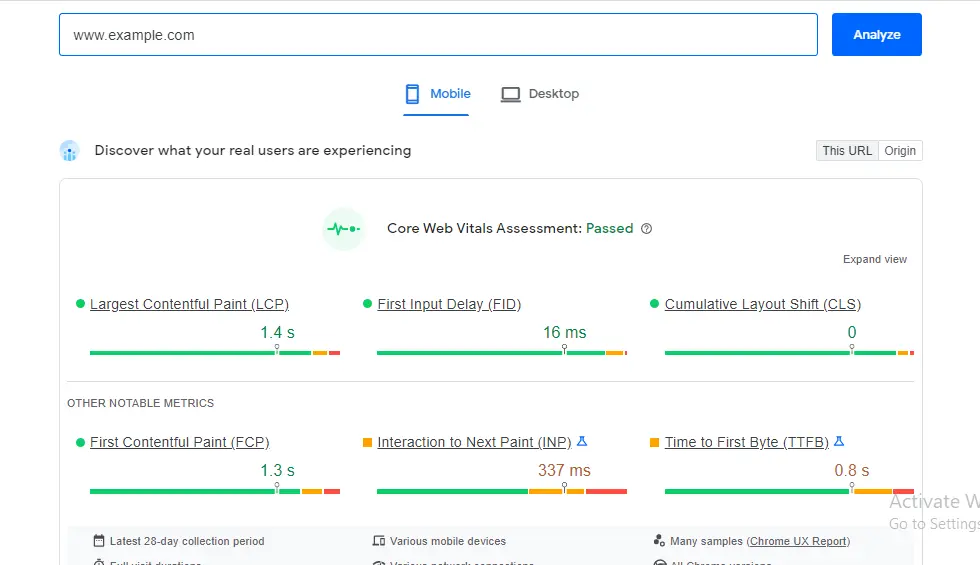
Google says “there is no single signal” for page experience. Of its parts, only Core Web Vitals are explicitly used by ranking systems. HTTPS, mobile display and avoiding intrusive pop-ups improve the experience but don’t directly raise rankings. Relevance takes priority: Google will still show the most relevant page even if its experience is poor, and good scores don’t guarantee a top spot. Where many helpful pages compete, a better experience can help.
Google’s targets for a “good” experience are Largest Contentful Paint within 2.5 seconds, Interaction to Next Paint within 200 milliseconds and Cumulative Layout Shift under 0.1.
5. Mobile-first indexing
Google primarily indexes the mobile version of most sites, so your phone page should have the same content as your desktop page. Our guide on mobile-first indexing goes deeper.
6. Freshness, where it matters
Google has freshness systems that favor recent content for queries that need it, such as news or changing information. That doesn’t mean changing dates on old pages, which Google lists as a warning sign.
7. Original content
Google has systems that favor original reporting and content over pages that only repeat it, and a deduplication system that shows the most relevant of near-identical results.
8. Location, language and device
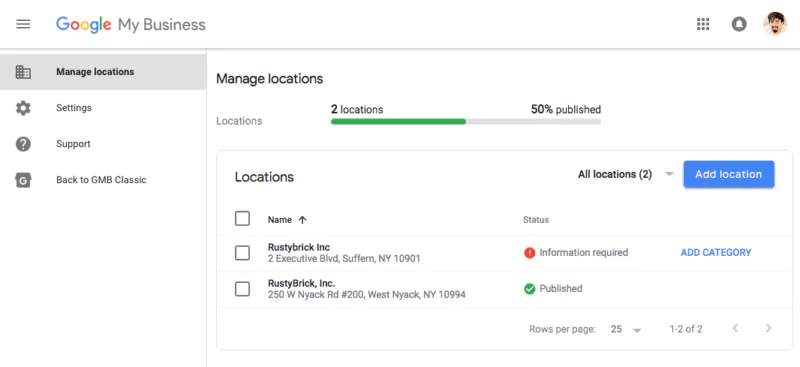
Google says these affect results. That’s why two people searching the same words can see different pages.
9. Site diversity
Google’s site diversity system generally limits top results to two listings from the same site, so a single site rarely fills a whole results page.
10. Spam detection
Google’s spam systems, including SpamBrain, target violations of its spam policies. Breaking them can lower rankings or remove pages from results entirely.
What to do: treat Tier 1 as your priority list. Make useful pages, make them easy to crawl, link them sensibly, and keep your site fast and usable on a phone.
Tier 2: Observed by practitioners, not confirmed by Google
SEO professionals report that these correlate with strong performance. Google hasn’t confirmed them as ranking factors, so treat them as ideas to test, not facts:
- Covering a topic in depth, including related questions
- A clear site structure that groups related pages
- Mentions of your brand on trusted sites
- Pages that keep visitors engaged
What to do: don’t pay for tactics aimed at one of these alone. Make them part of making your site better for visitors, and measure the result.
Tier 3: Metrics that aren’t ranking factors
These show up in tools and reports, but they aren’t ranking inputs:
- PageSpeed Insights and GTmetrix scores. They’re diagnostic tools. Core Web Vitals are used in ranking, but a tool’s grade isn’t a score Google reads. Use them to find problems, not as a target number.
- Domain Authority and similar scores. These are third-party metrics. Domain Authority, for example, is a Moz metric. They can help you compare sites, but they aren’t Google signals.
- E-E-A-T. Google says it isn’t a specific ranking factor. It’s a way of describing quality.
- Quality Score. That’s a Google Ads term, not an organic ranking factor.
- Keyword density and word count. Google lists padding word counts as a warning sign. Write as long as the topic needs.
- Structured data. Google says it can make a page eligible for some search features, but it doesn’t guarantee any, and it isn’t a direct ranking boost.
Tier 4: Myths to ignore
- “Google uses exactly 200 factors.” Google publishes no number or list, only that there are hundreds.
- “An exact-match domain helps.” Google has a system that limits credit for keyword-stuffed domain names.
- “Publish more, rank higher.” Google lists mass-producing topics as a warning sign.
- “AI content is penalized.” Google says AI-generated content isn’t against its guidelines by itself, but mass-producing low-value pages can break its spam policy, and AI content should be fact-checked.
- “More links is always better.” Google targets link spam, and it asks for descriptive, relevant links.
- “A tool’s score is your ranking.” Rankings come from Google’s systems, not from a tool’s number.
How to use all this
- Fix Tier 1 first. Useful content, crawlable and linked pages, a fast and mobile-friendly site.
- Check, don’t guess. Use Search Console to see which pages and queries perform, and our free SEO audit tools guide to find technical problems.
- Treat Tier 2 as experiments.
- Ignore Tier 3 targets except as diagnostics.
- Skip Tier 4 advice, especially anything that promises a guaranteed ranking.
If you’d like help with the basics, our SEO services and technical SEO audit are a starting point. We make no promise of rankings, because no one controls Google.
For how the whole system works, read how search engines work, and for what’s changing with AI answers, what is AEO.
Want help finding what’s holding your site back?
Tell us about your site and goals, and we’ll take a look. See our SEO services, then request a free quote or contact IndeedSEO.
Outrank Your Competitors with SEO Ranking Factors from IndeedSEO
Frequently asked questions
What are SEO rankings?
They’re the positions your pages hold in search results for particular searches. A higher position usually means more visitors.
Which factors are involved in search engine optimization?
Google confirms several: the relevance and meaning of your content, helpful and reliable content, links, Core Web Vitals, mobile-first indexing, freshness for some queries, original content, and spam policies. It also uses location, language and device.
How many ranking factors does Google use? Google says hundreds, and it doesn’t publish a complete list. Be careful with any article that claims an exact number.
Is E-E-A-T a ranking factor?
Google says E-E-A-T isn’t a specific ranking factor. Its systems use a mix of signals that can identify content with strong experience, expertise, authoritativeness and trust.
Are Core Web Vitals a ranking factor?
Of the page experience aspects, Core Web Vitals are the ones Google says its ranking systems explicitly use. Relevance takes priority, and good scores don’t guarantee top placement.
Do backlinks still matter?
Google lists link analysis and PageRank among its ranking systems, and says links help it judge relevance. But buying links or using link schemes is link spam, so earn links honestly.
Does my PageSpeed Insights score affect my ranking?
Not directly. It’s a diagnostic tool. Core Web Vitals are what Google’s ranking systems use, so use the report to find and fix slow pages.
How do I rank higher on Google?
Make your pages genuinely useful for a specific audience, make sure Google can crawl and index them, link your pages together, keep the site fast and mobile-friendly, and earn links honestly. There are no guaranteed shortcuts.
Is domain authority a Google ranking factor?
No. Domain Authority is a metric made by Moz and other tools use similar scores. They can be useful for comparison, but they aren’t Google signals.
How long does it take to rank?
It depends on competition and your starting point. Plan for months, not weeks, and be wary of anyone who promises results by a set date.