+1 808 999 0096

 info@indeedseo.com

Online Reputation Management (ORM) is the strategic practice of monitoring, influencing, and safeguarding your company’s digital identity across search engines, social media, and review platforms. In today’s hyper-connected marketplace, a single negative comment or a misleading article can instantly derail years of hard work and hinder customer trust. An actively managed digital footprint acts as a powerful asset that drives client acquisition, fosters brand loyalty, and protects your bottom line.
This guide explores the critical strategies and automated tools you need to proactively control your narrative, suppress harmful content, and build a resilient digital brand image.
Understanding Online Reputation Management

Online reputation management (ORM) is the process of tracking, monitoring, and enhancing a person or organization’s online presence as well as digital brand image. ORM encompasses a variety of strategies aimed at boosting the perception of a company or individual’s digital influence on the web. It makes use of tactics like search engine optimization (SEO), content marketing, social media interactions, and reputation tracking. Online Reputation Management is fundamental to a comprehensive digital marketing plan, and its advantages stretch beyond just elevating online presence.
There are four main ORM media channels: paid media, earned media, shared media, and owned media.
✓ Paid Media:
Paid media is known as promotional content that an organization pays for to reach its users or customers. Paid media allows businesses to have control over the messaging and targeting, ensuring their brand reaches a wider audience and generates visibility. However, it is essential to monitor and manage the paid media campaigns to ensure they align with the brand’s values and objectives.
✓ Earned Media:
Earned media encompasses publicity and exposure that a brand receives through organic means, without directly paying for it. Monitoring and responding to earned media is crucial to address any negative feedback or concerns promptly and maintain a positive brand image.
✓ Shared Media:
Social media content that is posted by users is referred to as ‘shared media’. This content consists of user-generated content on social networking sites, such as posts, shares, and comments, which has a significant influence on people’s judgments of corporations’ brand identities, as people can share their views on products or services with their social media acquaintances.
✓ Owned Media:
Owned media encompasses all the outlets over which a business has full power, including their online site, blog, social media profiles, and email campaigns. Owned media presents an opportunity to control the brand message, interact with the target market, and create trust. Regularly updating and optimizing owned media channels with relevant and valuable content helps in attracting and retaining customers while strengthening the brand’s online reputation.
Importance of Online Reputation Management

The necessity of a good online reputation is of the utmost importance in today’s technologically-linked environment, where information is easily attainable and online connections have a large part to play in the process of forming decisions.
Here are key reasons why online reputation management services hold immense significance in the digital landscape:
👉 First Impression and Trust Building:
Creating and maintaining a good brand image is essential for making people accept your offerings. Folks are more likely to examine product ratings and reviews prior to spending money on something. A great reputation is likely to draw more customers in and build trust, while bad feedback is sure to make people go away. Ultimately, it can affect sales and cost you potential opportunities.
👉 Influence Consumer Decision-Making:
People’s perceptions of an enterprise, product, or service prior to purchase can greatly affect their decision-making process. Consumers may conduct research to evaluate the credibility of a company before purchasing. Positive assessments and online acclaim can encourage customers to keep using a company’s services, while unfavorable reviews or a poor reputation can repel every potential customer. This can cause an organization to miss out on potential opportunities.
👉 Brand Differentiation and Competitive Advantage:
In a crowded digital landscape, a strong online reputation sets you apart from competitors. It allows you to demonstrate what makes you unique, your knowledge, and your customers’ satisfaction, setting your brand or personality apart from the rest. Having a positive image online can give your brand the upper hand compared to others in the market, making potential customers pick yours over the competition.
What are the Reasons to Manage Your Online Reputation?
It is essential to keep track of your digital reputation since it can have a significant effect nowadays. People often research on the internet and use social media websites to make decisions and trust a brand. Therefore, taking care of your online reputation can make sure that what other people see is truly reflective of what you or your business stands for.
Secondly, having an impressive online presence can greatly affect your personal and professional objectives. No matter if you are a job hunter, a business starter, or a corporate head, a favorable online reputation can help you outshine competitors and increase your odds of success. Companies, patrons, and partners have a habit of investigating persons or organizations prior to getting into a partnership with them, and a good online reputation can make you stand out.
Top Strategies for Effective Online Reputation
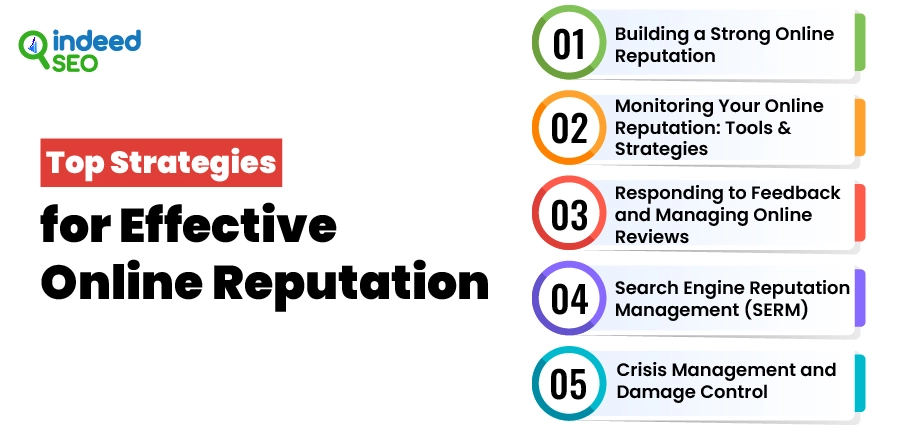
Here are seven strategies for effectively managing your online reputation.
1. Building a Strong Online Reputation
Building a strong online reputation is crucial for individuals and businesses alike. Here are key steps and strategies to establish a robust online reputation:
- Define Your Brand Identity
- Develop Engaging and Valuable Content
- Optimize Your Website and Online Profiles
- Build a Strong Social Media Presence
- Encourage and Respond to Reviews
2. Monitoring Your Online Reputation: Tools & Strategies
Effectively monitoring your online reputation is crucial for maintaining a positive image and addressing any potential issues promptly. Here are some tools and strategies to help you stay on top of your online reputation:
- Google Alerts
- Social Media Monitoring Tools
- Review Monitoring Platforms
- Online Listening Tools
- Website Analytics
3. Responding to Feedback and Managing Online Reviews:
Effectively responding to feedback and managing online reviews is crucial for maintaining a positive online reputation. Here are some strategies to help you navigate this process:
- Promptly Monitor and Respond
- Stay Professional and Positive
- Address Negative Reviews Constructively
- Highlight Positive Feedback
- Take Conversations Offline
4. Search Engine Reputation Management (SERM):
Maintaining your visibility and image in web search engines is generally known as Search Engine Reputation Management (SERM). It is imperative to have control over what pops up in search results since this is typically the place that people check when searching for data.
5. Crisis Management and Damage Control:
Crisis situations can arise unexpectedly and have a significant impact on your online reputation. Effectively managing and mitigating the damage during a crisis is essential for maintaining trust and credibility. Here are key strategies and considerations for crisis management and damage control:
- Develop a Crisis Communication Plan
- Act Swiftly and Transparently
- Monitor Online Conversations
- Apologize and Show Empathy
Last Thoughts
Are you looking for the right Online Reputation Management strategy to protect and strengthen your digital brand image in an increasingly competitive online space?
At IndeedSEO, we are a recognized top ORM agency with proven expertise in building, repairing, and maintaining strong online reputations for brands across industries. Contact us today!
Grow faster with IndeedSEO today
FAQ’s
Q: Is Online Reputation Management the same as SEO?
A: No. Online reputation management and SEO are not the same, although they are closely related. ORM focuses on reputation management, including managing reviews, social media interactions, and public perception, while SEO focuses on improving search engine rankings and organic traffic.
Q: Which is the very first step of Online Reputation Management?
A: The initial step of ORM (online reputation management) is to organize a comprehensive audit as well as examination of your existing online reputation. This incorporates tracking and understanding current content, reviews, mentions, and social media activity associated with your business or personal identity.
Q: How can I build a positive online reputation?
A: Building a positive online reputation requires consistent effort and a proactive approach. You can accomplish this goal through offering superior products or services, interacting frequently on social media with your customer base, getting appreciative customers to post good comments, producing content that demonstrates your knowledge, and staying very visible online.
Q: Can I enhance my online reputation on my own, or do I need to seek professional help?
A: It is possible to enhance and take control of your online reputation without assistance, especially for people or smaller businesses. However, for larger organizations or complex reputation issues, seeking professional help from online reputation management companies or digital marketing agencies with expertise in ORM can provide specialized strategies, insights, and guidance for optimal results.