+1 808 999 0096

 info@indeedseo.com


The seven key components of a strong healthcare SEO service usually include local SEO, keyword targeting, content optimization, technical SEO, on-page improvements, reputation management, and performance tracking. Together, these components help healthcare businesses improve search rankings, attract more qualified patients, and build trust online. Wondering how? This guide explains the 7 key components that can strengthen your digital strategy and support long-term growth.
Get a Custom Healthcare SEO Strategy from IndeedSEO
7 Key Components of Healthcare SEO Services
Whether you’re a large hospital, a private clinic, or an individual healthcare professional, incorporating these key components into your SEO strategy can help you stay ahead in the competitive healthcare landscape and better connect with your target audience. Explore these key Healthcare SEO Services:
1. Keyword Research and Analysis
Keywords are an important component of an effective SEO service, which demands in-depth research and analysis. Understanding your target audience’s search behavior and identifying the right keywords are crucial for optimizing your website’s content and ensuring it appears in relevant search results.
✓ Understanding Healthcare-Related Keywords
To begin, familiarize yourself with healthcare-related keywords that are relevant to your business’s search queries. These often include medical conditions, treatment options, medical specialties, and healthcare procedures. Consider both medical jargon and layman’s terms to cover a broader range of user queries.
✓ Competitor Analysis and Keyword Gap Identification
Analyzing your competitors’ websites can offer insights into their keyword strategies. Identify the keywords they are targeting and evaluate how well they rank for those terms. This analysis can help you identify potential gaps in your keyword targeting.
✓ Tools for Effective Keyword Research
There is a wide assortment of tools available online to aid in keyword research. Apart from Google Keyword Planner, tools like SEMrush, Ahrefs, and Moz Keyword Explorer provide valuable data and competitive intelligence. Leverage these tools to refine your list of target keywords.
2. On-Page SEO Optimization
Optimizing individual web pages for on-page SEO is an important part of expert healthcare SEO services. Refine the key on page elements to increase your website’s visibility in search results and improve the overall customer experience.
✓ Craft SEO-Friendly Title Tags and Meta Descriptions
Create unique and descriptive title tags for each web page. Incorporate relevant keywords in the title to improve its visibility in search results. Similarly, write compelling meta descriptions that accurately summarize the page’s content.
✓ Create High Quality & Relevant Content
Content quality matters for successful on-page SEO as per the 2026 search standards. Add informative content that aligns with Google AI overviews and services as the relevant answer for the target audience. Whether it’s blog posts, service pages, or patient resources, ensure that your content is valuable and aligns with E-E-A-T.
✓ Optimize Headings & Subheadings
Make sure to use the correct header tags (H1, H2, H3, etc.) to organize your content in an appropriate sequence. Header tags help search engines analyze the content and rank it at the top of search results.
✓ Right Keyword Placement and Synonyms
Strategically place your target keywords throughout the content, but avoid overstuffing. Use synonyms and related terms to make the content more natural and appealing to readers and search engines alike.
Get a Custom Healthcare SEO Strategy from IndeedSEO
3. Local SEO for Healthcare Businesses
Local SEO is a crucial component of healthcare SEO, especially for healthcare business websites that primarily serve a specific geographical area. Local SEO concentrates on optimizing your web presence to appear in local search results. With an increasing number of patients using “near me” searches to find healthcare providers, top local SEO services becomes essential for attracting local leads and driving foot traffic to your physical location.
✓ Optimize GMB Profile
Ensure that your Google My Business listing is accurate and optimized, as it is an integral element of local SEO. Confirm that the particulars associated with your business, such as your name, address, phone number, and operating hours, are valid and current.
✓ Local Citations and NAP Consistency
Consistency is a must-have component for local citations. Ensure that your NAP information is consistent across all online directories, local business listings, and your website. Inaccurate or conflicting information can negatively impact your local search rankings.
✓ Online Reviews and Testimonials
Positive patient reviews and testimonials can significantly influence local search rankings and patient decision-making. Encourage satisfied clients or patients to post reviews and feedback on platforms like Yelp, Google, and Healthgrades. Respond to reviews, whether positive or negative, to demonstrate your commitment to patient satisfaction.
Read More: Affordable Local SEO Services: A Comprehensive Guide
4. Mobile Optimization for Healthcare Websites
A huge amount of traffic comes from mobile devices. So, adapt to different screen sizes and resolutions, ensuring a flawless experience on smartphones and tablets.
✓ Responsive Web Design for Healthcare Content
Responsive web design is an approach to mobile optimization that adjusts a website’s layout and elements based on the user’s device. Using a responsive design ensures that your healthcare information can be read and used on any screen size, improving readability and usability.
✓ Improve Page Load Speed for Mobile Users
Users want websites to load quickly on their smartphones. Slow-loading websites can result in high bounce rates and a negative user experience. Optimize images, minify CSS and JavaScript, and leverage browser caching to improve page load speed on mobile.
✓ Mobile-Specific Keywords and User Intent
Consider the differences in user behavior on mobile devices and desktops when selecting keywords. Mobile users often have a specific intent, such as finding nearby healthcare providers or quick answers to medical queries. Tailor your keyword strategy to address mobile user intent.
5. Technical SEO and Site Structure

Technical optimization and site structure ensure search engines can crawl, index, and understand your website effectively. By addressing the technical aspects of Healthcare SEO companies, you lay a solid foundation for better search engine rankings and an improved user experience.
✓ Site Architecture for Healthcare Websites
Create a clear and logical site architecture that hierarchically organizes your healthcare content. Create a user-friendly navigation menu that allows visitors to find information easily. A well-structured website enhances usability and helps search engines understand the relationships between different pages.
✓ URL Structure and SEO Best Practices
Optimize your URL structure by keeping it concise and descriptive. Use relevant keywords in your URLs, and avoid using unnecessary parameters or symbols. A clean URL structure contributes to a more user-friendly and search engine-friendly website.
✓ XML Sitemaps and Robots.txt Configuration
Generate and submit XML sitemaps to search engines, providing a roadmap of all the important pages on your website. This allows search engines to crawl and index your site more efficiently. Additionally, use a properly configured robots.txt file to guide search engine crawlers and control access to specific parts of your website.
✓ HTTPS and SSL Certificates for Website Security
Secure your healthcare website with HTTPS (Hypertext Transfer Protocol Secure) to encrypt data transmitted between users and your server. This ensures that patient information remains private and protected. Search engines also prioritize secure websites in their rankings.
6. Link Building and Backlink Strategies
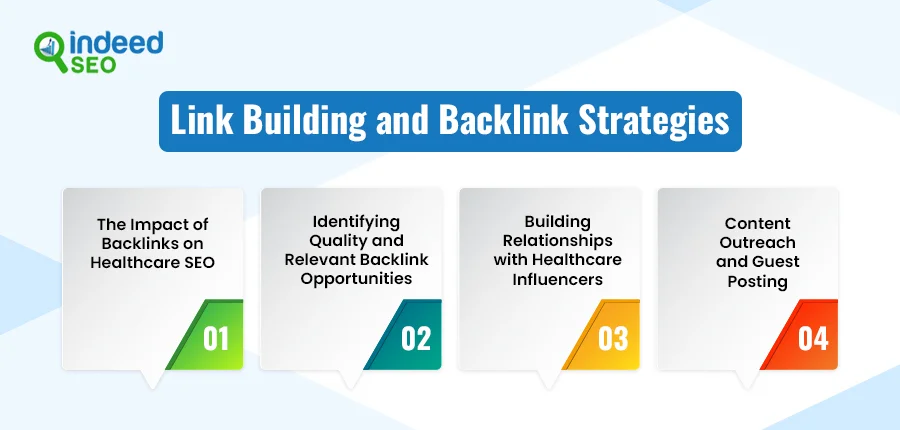
Link building is a fundamental aspect of off-page SEO and plays a significant role in establishing your healthcare website’s authority and credibility in the eyes of search engines. When other reputable websites link to your content, it signals to search engines that your website is a valuable and trustworthy resource. Implementing effective link building and backlink strategies by a healthcare SEO expert can boost your healthcare website’s search rankings and drive more organic traffic.
✓ The Impact of Backlinks on Healthcare SEO
Backlinks, also known as inbound links, are links from external websites that point to pages on your healthcare website. Search engines consider backlinks as “votes of confidence” from other sites, indicating the relevance and quality of your content. Websites with a strong backlink profile are often seen as more authoritative and are likely to rank higher in search results.
✓ Identify Quality and Relevant Backlink Opportunities
Focus on acquiring backlinks from reputable and relevant websites within the healthcare industry. Look for opportunities to collaborate with medical associations, healthcare publications, and influential healthcare bloggers who can link back to your informative content.
✓ Building Relationships with Healthcare Influencers
Cultivate relationships with influential figures and thought leaders in the healthcare field. Engaging with influencers through guest posting, interviews, or collaborative content can lead to valuable backlinks and exposure to a broader audience.
✓ Content Outreach and Guest Posting
Develop high-quality, informative content and reach out to other websites in the healthcare niche to offer guest posts or collaborations. Guest posting allows you to showcase your expertise while gaining valuable backlinks to your website.
7. Measure and Analyze SEO Performance
Measure and analyze the performance of your healthcare SEO efforts to gauge the effectiveness of your strategies and identify areas for improvement. By tracking key performance indicators (KPIs) and analyzing the data, you can make data-driven decisions to optimize your website’s search rankings and enhance your online presence.
✓ Key Performance Indicators (KPIs) for Healthcare SEO
Define relevant KPIs to assess the success of your SEO efforts. Common KPIs for healthcare SEO include organic website traffic, keyword rankings, conversion rates, bounce rates, and the number of quality backlinks acquired.
✓ Google Analytics for Tracking Website Traffic
Utilize Google Analytics to monitor and analyze website traffic. It offers valuable and helpful insights into traffic sources, user behavior, and popular content. Use this data to refine your content strategy and improve user engagement.
✓ Monitoring Keyword Rankings and Click-Through Rates
Regularly track your target keyword rankings and monitor changes over time. Additionally, analyze click-through rates (CTR) for your web pages in search results. A high CTR indicates that your meta tags and content are appealing to users.
✓ Evaluating Conversion Rates and Goal Completions
Set up conversion goals in Google Analytics to measure the actions users take on your websites, such as appointment bookings or newsletter sign-ups. Analyze conversion rates to understand the effectiveness of your calls-to-action and landing pages.
Conclusion
Looking for a healthcare SEO strategy that actually improves your online visibility and brings more patient inquiries?
Many Healthcare businesses choose IndeedSEO because our team ensures:
- Strong healthcare-focused SEO strategies
- Industry-specific keyword targeting and optimization
- Transparent reporting and performance tracking
- Customized SEO plans
- Continuous optimization for long-term growth
With the right strategy and expert execution, IndeedSEO helps healthcare businesses build a powerful digital presence and attract the right patients consistently.
Get a Custom Healthcare SEO Strategy from IndeedSEO
FAQs
Q1: How can healthcare providers benefit from local SEO?
A: Local SEO allows healthcare providers to target patients within their geographical area. By optimizing for local search terms and Google My Business, providers can increase their visibility to local patients, attract more foot traffic to their physical location, and improve patient trust.
Q2: How do backlinks impact healthcare SEO?
A: Backlinks are crucial in healthcare SEO as they serve as “votes of confidence” from other reputable websites. High-quality backlinks signal to search engines that your content is valuable and authoritative, leading to higher search rankings and increased organic traffic.
Q3: What are some effective keyword research tools for healthcare SEO?
A: There are several keyword research tools available for healthcare SEO, such as Google’s Keyword Planner, SEMrush, Ahrefs, and Moz Keyword Explorer. These tools help identify relevant healthcare-related keywords and assess their search volume and competition.
Q4: How can I measure the success of my healthcare SEO efforts?
A: To measure the success of healthcare SEO, track key performance indicators (KPIs) like organic website traffic, keyword rankings, conversion rates, and backlink acquisition. Utilize Google Analytics and other SEO tools to analyze data and make data-driven decisions for optimization.