+1 808 999 0096

 info@indeedseo.com
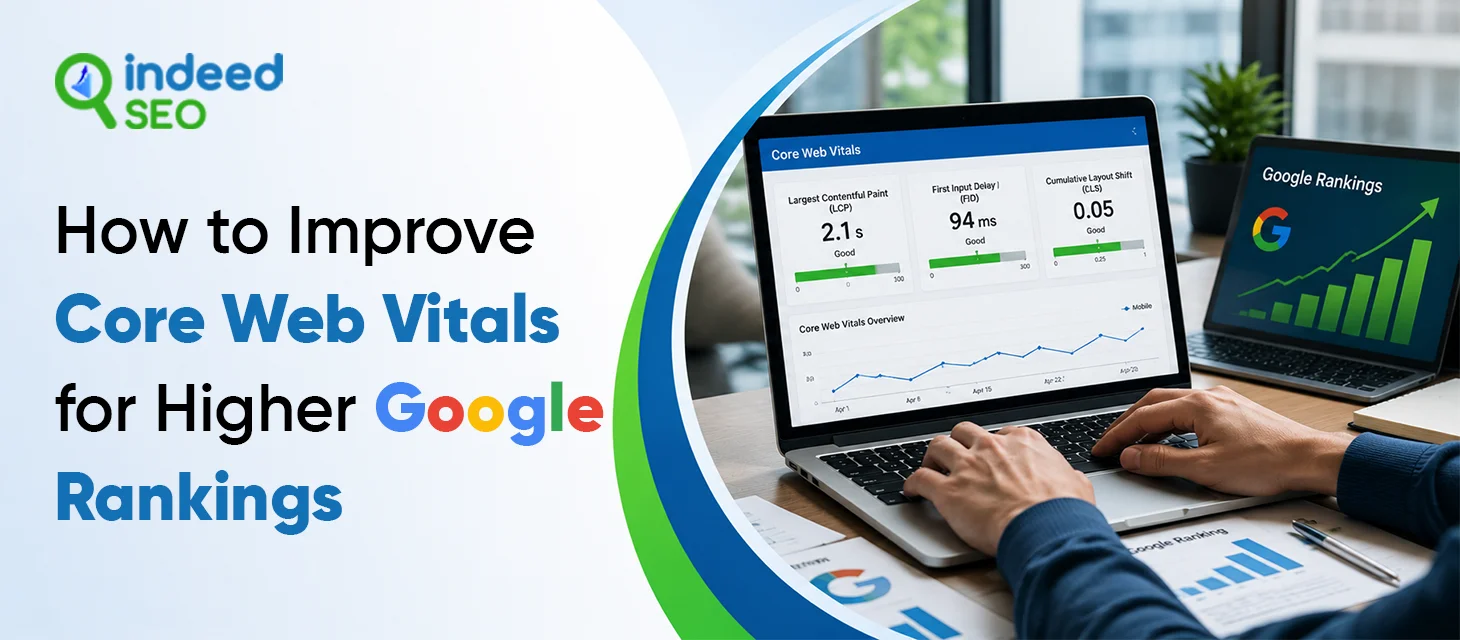
Improving Core Web Vitals is crucial for SEO, as slow or clunky sites directly impact your search visibility and user retention. The good news? Improving Core Web Vitals doesn’t always require a complete website redesign. Small, strategic improvements can make a noticeable difference in both user experience and search visibility.
Let’s explore what Core Web Vitals are, why they matter, and how you can improve them.
What Are Core Web Vitals?
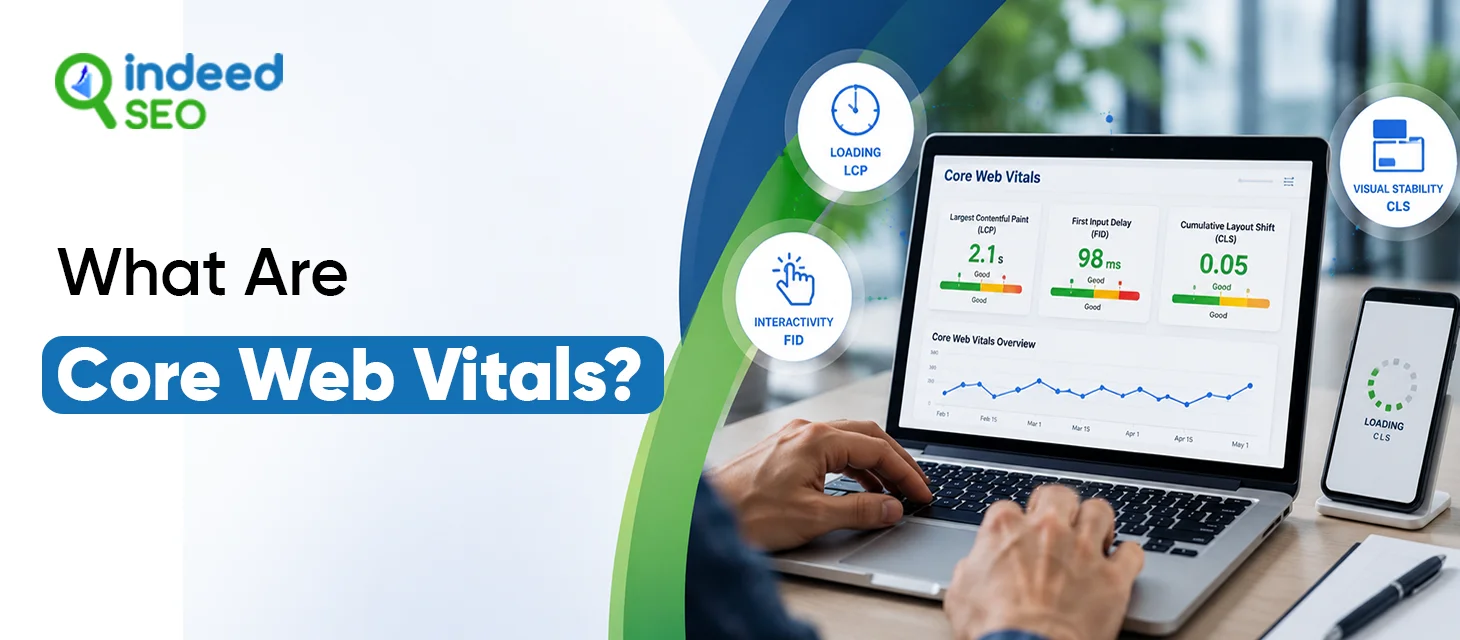
Core Web Vitals are Google’s metrics for evaluating how users perceive a webpage. These metrics aren’t just about technical speed but about how fast people can actually see and interact with your content.
Google currently measures three key signals:
Largest Contentful Paint (LCP)
LCP measures how long it takes for the largest visible content element – e.g., a hero image, banner, or heading – to load on the screen.
An LCP score of less than 2.5 seconds is considered good.
Interaction to Next Paint (INP)
INP is a measure of how responsive your site feels when people use it.
When someone clicks a button, opens a menu, or submits a form, that response should feel instantaneous.
Good INP is Less than 200 milliseconds.
Cumulative Layout Shift (CLS)
Have you ever clicked a button and it moved because an image just loaded?
That’s layout shift.
CLS quantifies how visually stable your web page is as it loads.
A good CLS score is 0.1 or less.
Optimize Core Web Vitals and Grow Your Search Visibility with IndeedSEO
Do Core Web Vitals Really Affect Google Rankings?
Yes — but probably not in the way many people have thought.
Core Web Vitals are just one part of Google’s Page Experience signals. They won’t suddenly take a low-quality website to the top of the search results.
However, when the content on two pages is essentially the same, the better user experience usually wins out.
Even more importantly, better Core Web Vitals improve metrics that directly influence business growth, including:
- Lower bounce rate
- Longer session duration
- Higher engagement
- Better conversion rates
- Improved customer satisfaction
Why Your Core Web Vitals Might Be Poor
There are several reasons your site can be slow without you noticing.
Some of the most prevalent reasons are:
- Large, unoptimized images
- Underperforming web host
- Excessive plugins
- Bulky JavaScript files
- Render-blocking CSS
- Third-party scripts, such as chat widgets and tracking tools
- Inadequate mobile design solutions
- Bulky font files
- Too many animations
The more unnecessary files your browser has to load, the slower your website will be.
How to Measure Core Web Vitals
Before making changes, it’s important to understand your current performance.
Here are the most reliable tools:
- Google PageSpeed Insights (for both lab data and real user data).
- Google Search Console to find pages with Core Web Vitals problems.
- Lighthouse for deep performance auditing.
- Chrome DevTools for advanced debugging.
- Chrome UX Report (CrUX) to get a sense of how real users experience your site.
These tools don’t just tell you what your score is — they also tell you what’s slowing your website down.
How to Improve Largest Contentful Paint (LCP)
Since LCP measures loading speed, your goal is to display important content as quickly as possible.
Here are a few ways to enhance it.
Optimize Images
One of the major causes of slow-loading websites is large images.
Rescale your images as required and compress them all before uploading (use an image compression tool, etc.) Also, use the latest image formats like WebP or AVIF that offer the best image quality with smaller file sizes.
Upgrade Your Hosting
Your site can be perfectly optimized, but it won’t work well on slow hosting.
Pick a trustworthy host with fast server response times and enough capacity to accommodate your traffic.
Use a Content Delivery Network (CDN)
Essentially, a CDN maintains copies of your website on multiple servers around the world.
Visitors download content from the nearest server, reducing loading time significantly.
Remove Render-Blocking Resources
CSS and JavaScript files that load before your visible content can delay rendering.
Minify these files, defer unnecessary scripts, and load only what’s required immediately.
Preload Critical Resources
Browsers help us prioritize critical resources, such as hero images and important fonts, so they load faster.
How to Improve Interaction to Next Paint (INP)
A responsive website just feels right.
If your pages show hesitation after users click something, excessive JavaScript may be the cause.
Here are just a handful of real, actionable improvements.
Reduce JavaScript
Remove unused scripts whenever possible. Every extra line of JavaScript requires processing time.
Break Up Long Tasks
Rather than asking the browser to do one big task, divide your work into smaller tasks.
This keeps the interface reactive.
Delay Non-Essential Scripts
The analytics, live chat, social widgets, and advertisements don’t need to be loaded immediately.
Deferring them can greatly improve responsiveness.
Optimize Event Handlers
Buttons, menus, and forms should all respond quickly, not waiting for unnecessary background processing.
How to Improve Cumulative Layout Shift (CLS)
Unexpected movement frustrates visitors more than many website owners realize.
Fortunately, CLS is typically one of the easiest metrics to fix.
Set Image Dimensions Always
Reserve space for images before they load. This prevents the content around it from shifting unexpectedly too.
Reserve Space for Ads
Ads sometimes load after page content. Setting a fixed amount of space helps prevent sudden movements.
Optimize Font Loading
Custom fonts sometimes cause text to jump after loading. Using efficient font-display settings helps maintain visual stability.
Avoid Inserting Content Above Existing Elements
Notification bars, banners, and pop-ups should never cause a sudden downward shift in page content while users are reading.
Mobile Optimization Tips for Better Core Web Vitals
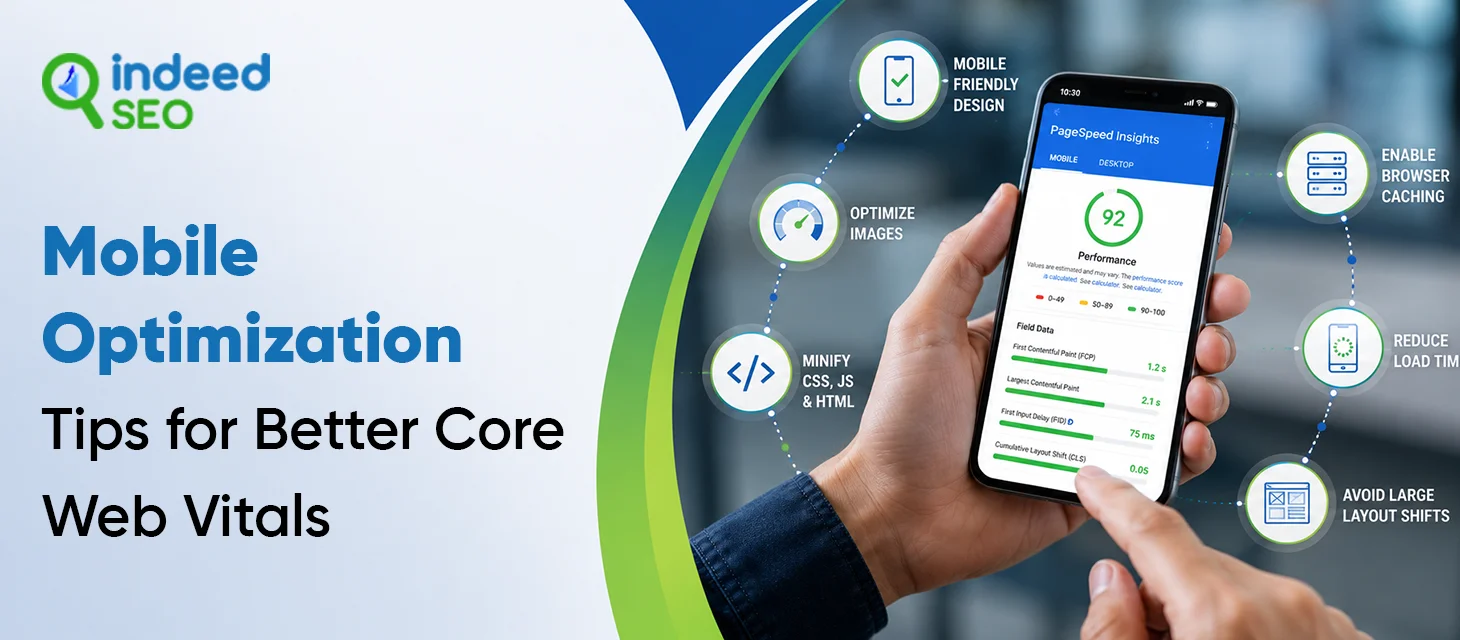
Don’t overlook mobile Optimization! More than 50% of web traffic comes from mobile devices. A site that ranks well on desktop but poorly on mobile will struggle in search results.
For enhanced mobile performance:
- Implement responsive design
- Simplify navigation
- Reduce unnecessary animations
- Compress images for smaller screens
- Make the buttons easy to tap
- Test pages on a variety of devices
Keep in mind that mobile users are often on slower connections, so optimization matters even more!
Advanced Techniques to Boost Core Web Vitals Performance
Once you have covered the fundamentals, a few advanced optimizations could further help enhance Core Web Vitals.
These include:
- Enabling browser caching
- Using Brotli or Gzip compression
- Upgrading to HTTP/2 or HTTP/3
- Applying critical CSS
- Code splitting large JavaScript bundles
- Lazy loading off-screen images
- Adopting server-side rendering when appropriate
Although some of them are more difficult to implement than others, everything on this list can dramatically improve the performance of your site.
Common Core Web Vitals Mistakes to Avoid
Many site owners unknowingly degrade their site’s performance over time.
Watch out for these common mistakes:
- Uploading full-resolution images straight from cameras
- Installing unnecessary WordPress plugins
- Adding multiple tracking scripts
- Ignoring mobile optimization
- Auto-playing videos
- Using too large sliders
Simple Core Web Vitals Checklist
Before publishing or making any changes to your website, be sure you have covered the following essentials:
- Compress images
- Use modern image formats
- Minify CSS and JavaScript
- Enable browser caching
- Reduce server response time
- Remove unwanted codes
- Optimize font loading
- Cut down on third-party scripts
- Run regular tests on pages
- Track performance in Google Search Console
Minor changes across multiple areas often have a greater impact than one major optimization.
Optimize Core Web Vitals and Grow Your Search Visibility with IndeedSEO
Final Thoughts
Want to improve your Core Web Vitals and increase your Google rankings? IndeedSEO has you covered. Our technical SEO specialists diagnose performance bottlenecks, tune and fix your site for speed and stability, and deploy best-practice solutions that delight users, increase search visibility, and enable sustainable organic growth.
Get in touch with us today!