+1 808 999 0096

 info@indeedseo.com
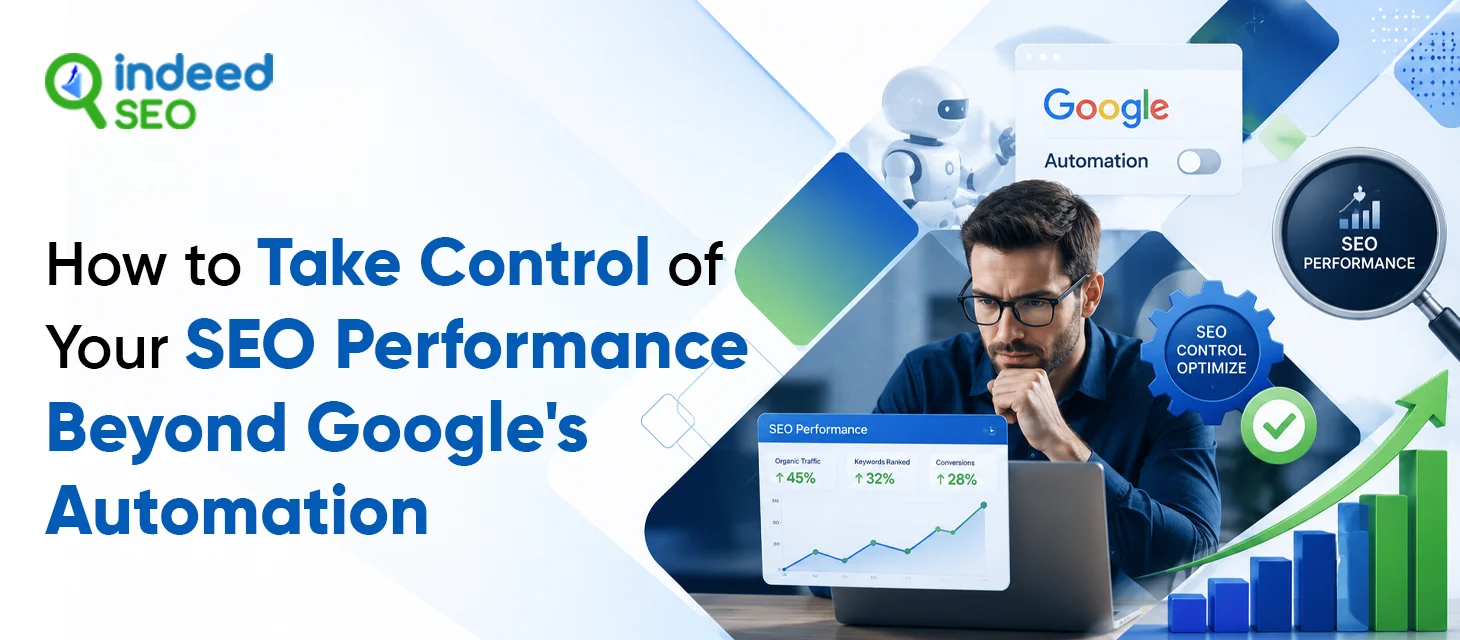
Taking control of your SEO performance means looking beyond Google’s automated systems. Instead of focusing only on keyword rankings, prioritize building topical authority, showcasing real expertise (E-E-A-T), and understanding what your audience truly wants. While automation can efficiently handle technical audits and routine SEO tasks, human insight is what builds trust, creates meaningful content, and helps your brand stand out in AI search.
Let’s explore how you can take control of your SEO performance.
Why Relying Only on Google’s Automation Is Risky
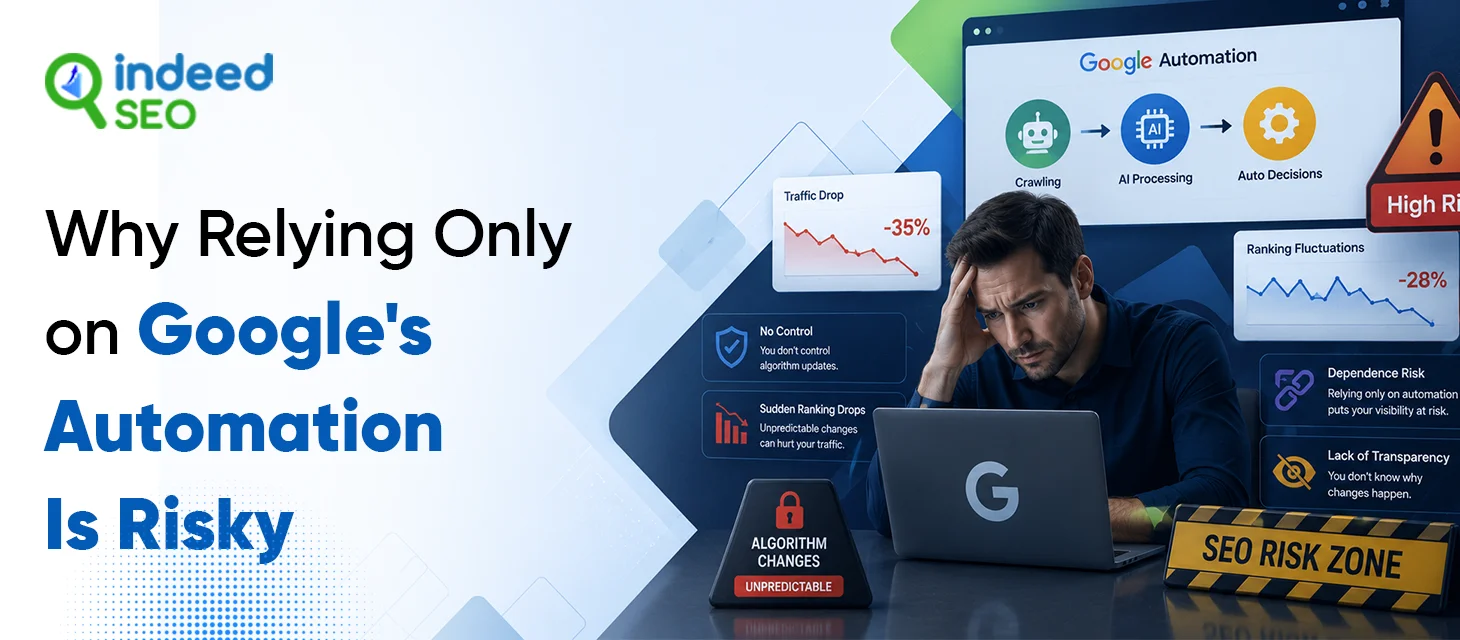
Google’s automation is designed to improve the search experience, not your business goals.
It can crawl pages, identify technical issues, understand website structure, and even generate AI summaries. However, it doesn’t know your customers the way you do.
Automation cannot:
- Build your brand authority
- Understand customer emotions
- Share real experiences
- Create unique industry insights
- Develop long-term customer relationships
- Position your business as an industry leader
Thousands of websites can receive the same automated recommendations. If everyone follows identical advice, what makes your business stand out?
The answer is simple: your experience, expertise, and ability to provide information that competitors and AI cannot easily replicate.
Instead of focusing only on rankings, successful businesses are now investing in topical authority, audience trust, and valuable content that serves real people.
Enhance Your SEO Results with Data-Driven Optimization Strategies from IndeedSEO
Shift Your SEO Focus Beyond Rankings
For years, SEO success has been measured by keyword rankings.
While rankings still matter, they’re no longer the only measure of SEO success.
Today, you should also measure:
- Brand visibility across AI platforms
- User engagement
- Returning visitors
- Lead quality
- Conversion rates
- Topical authority
- Brand mentions
- Customer trust
Modern SEO is about becoming the most reliable source of information within your niche rather than simply appearing first for one keyword.
1. Optimize for AI Search and Answer Engines
Search behavior is changing rapidly.
Millions of users now ask questions directly to AI tools instead of browsing multiple websites.
If your content isn’t optimized for AI search, you may lose visibility even if your traditional rankings remain stable.
Write for machines and humans
AI systems prefer content that is easy to understand.
Instead of long paragraphs filled with jargon, use:
- Clear H2 and H3 headings
- Short paragraphs
- Direct answers
- Bullet points
- Logical content flow
Well-structured content is easier for both readers and AI systems to interpret.
Use Schema Markup
Schema markup gives search engines additional context about your pages.
Depending on your content, consider implementing:
- Article Schema
- FAQ Schema
- How-To Schema
- Organization Schema
- Product Schema
Add Quick Summaries
After each major section, include a concise takeaway.
Simple phrases like:
- In short…
- Key takeaway…
- The bottom line…
help AI quickly identify the core message while improving readability for users.
Remember, AI doesn’t just rank pages anymore—it extracts answers.
Make yours easy to find.
2. Build Firsthand Experience with E-E-A-T
Experience, Expertise, Authoritativeness, and Trustworthiness (E-E-A-T) is one of Google’s top priorities today.
It is becoming increasingly easy for AI to generate generic content.
True experience is something that AI can’t easily mimic.
That’s where your edge is.
Publish Original Research
Instead of rewriting existing articles, create something new.
Examples include:
- Industry surveys
- Customer research
- Internal performance data
- Case studies
- Original experiments
Unique data often becomes a reference point that AI systems and other websites cite.
Showcase Real Experts
Every important article should clearly identify who created it.
Include:
- Author biographies
- Professional credentials
- Industry experience
- LinkedIn profiles
- Company expertise
People trust people—not anonymous websites.
Google increasingly rewards that transparency.
Create Visual Assets
Original visuals add value that text alone cannot provide.
Consider creating:
- Charts
- Infographics
- Process diagrams
- Screenshots
- Videos
- Custom illustrations
Don’t forget descriptive filenames, captions, and alt text so search engines understand your visuals.
Visual content also increases engagement and improves your chances of earning backlinks.
3. Track AI Visibility Instead of Only Organic Rankings
Traditional SEO reports often focus on:
- Rankings
- Clicks
- Impressions
- Organic traffic
While useful, these metrics don’t show how visible your brand is across AI search.
Your business might appear frequently inside AI-generated answers without receiving a traditional click.
That’s why AI visibility is becoming a new SEO metric.
Monitor Brand Mentions
Check how often platforms like ChatGPT, Google AI Mode, Gemini, and Perplexity mention your company when users ask relevant questions.
If competitors appear more frequently, that’s an opportunity to improve your authority.
Track AI Citations
Being cited as a trusted source is becoming just as valuable as ranking first.
Review whether AI tools reference:
- Your research
- Your guides
- Your statistics
- Your case studies
Original content significantly improves citation opportunities.
Analyze Brand Sentiment
Visibility alone isn’t enough.
Pay attention to how AI describes your business.
Does it position your company as:
- An industry expert?
- A trusted provider?
- An innovative brand?
Positive positioning strengthens customer confidence before they even visit your website.
4. Diversify Your Traffic Sources
Search traffic is valuable.
But relying entirely on Google creates unnecessary risk. Algorithm updates, AI Overviews, and zero-click searches can reduce website visits overnight.
Smart businesses build audiences they own.
Build an Email List
Every visitor shouldn’t disappear after reading one article.
Offer valuable resources like:
- SEO checklists
- Industry reports
- Templates
- Free tools
- Guides
Email subscribers give you a direct communication channel that no algorithm can take away.
Build Communities
People increasingly trust conversations over advertisements.
Become active where your audience already spends time.
Examples include:
- Industry forums
- Slack communities
- Discord servers
- LinkedIn groups
- Professional communities
Helping people consistently builds credibility that search engines eventually recognize as well.
Strengthen Social Presence
SEO and social media now work together.
- Share educational content
- Collaborate with industry professionals
- Partner with micro-influencers
- Encourage conversations around your expertise
Referral traffic from trusted communities often converts better than cold search traffic.
5. Take Control of Your Analytics
Many businesses open Google Analytics once a month, glance at traffic numbers, and move on.
That’s not enough. Traffic doesn’t pay the bills. Conversions do.
Track Business Goals
Measure actions that directly impact revenue.
Examples include:
- Contact form submissions
- Phone calls
- Demo requests
- Newsletter signups
- Purchases
These metrics provide far more value than page views alone.
Build Custom Dashboards
Connect tools like:
- Google Search Console
- Google Analytics
- Google Looker Studio
Create dashboards focused on:
- Highest-converting pages
- Revenue-driving keywords
- Lead generation
- Conversion rates
- Organic growth trends
This helps you make decisions based on business performance—not vanity metrics.
The Right Balance Between Automation and Human Expertise
Successful SEO isn’t about choosing between automation and human expertise—it’s about using both effectively.
Automation is incredibly useful for repetitive SEO tasks such as:
- Technical audits
- Rank tracking
- Site monitoring
- Indexation checks
- Reporting
- Broken link detection
Human expertise remains essential for:
- Understanding customer intent
- Creating compelling content
- Building trust
- Solving complex problems
- Developing unique perspectives
- Strengthening brand authority
The best SEO strategies combine automation for efficiency with human creativity for differentiation.
Enhance Your SEO Results with Data-Driven Optimization Strategies from IndeedSEO
Final Thoughts
Ready to Take Control of Your SEO Performance?
Partner with IndeedSEO, a full-service SEO company, to help increase rankings, enhance brand authority, and grow your visibility across traditional search engines and the new era of AI platforms. Contact our experts today and start building sustainable organic growth.