+1 (917) 565-8527

 info@indeedseo.com

If you heard about SearchGPT in 2024 and then stopped hearing about it, you didn’t miss anything. It just changed names. The experimental search tool from OpenAI didn’t disappear. Its features became part of ChatGPT itself, and that’s why people now talk about ChatGPT search instead.
This guide clears up what SearchGPT was, how ChatGPT search works today, how it compares with Google and Perplexity, and what you can do to get your website mentioned in its answers.
SearchGPT in One Minute
- SearchGPT was a prototype AI search tool announced by OpenAI in July 2024.
- It gave direct, conversational answers with links to sources, instead of a list of blue links.
- It was tested with a small group at first, and OpenAI said it would bring the best features into ChatGPT.
- ChatGPT search is the result. It’s the search feature built into ChatGPT, and it’s the thing to optimize for today.
What Is SearchGPT?
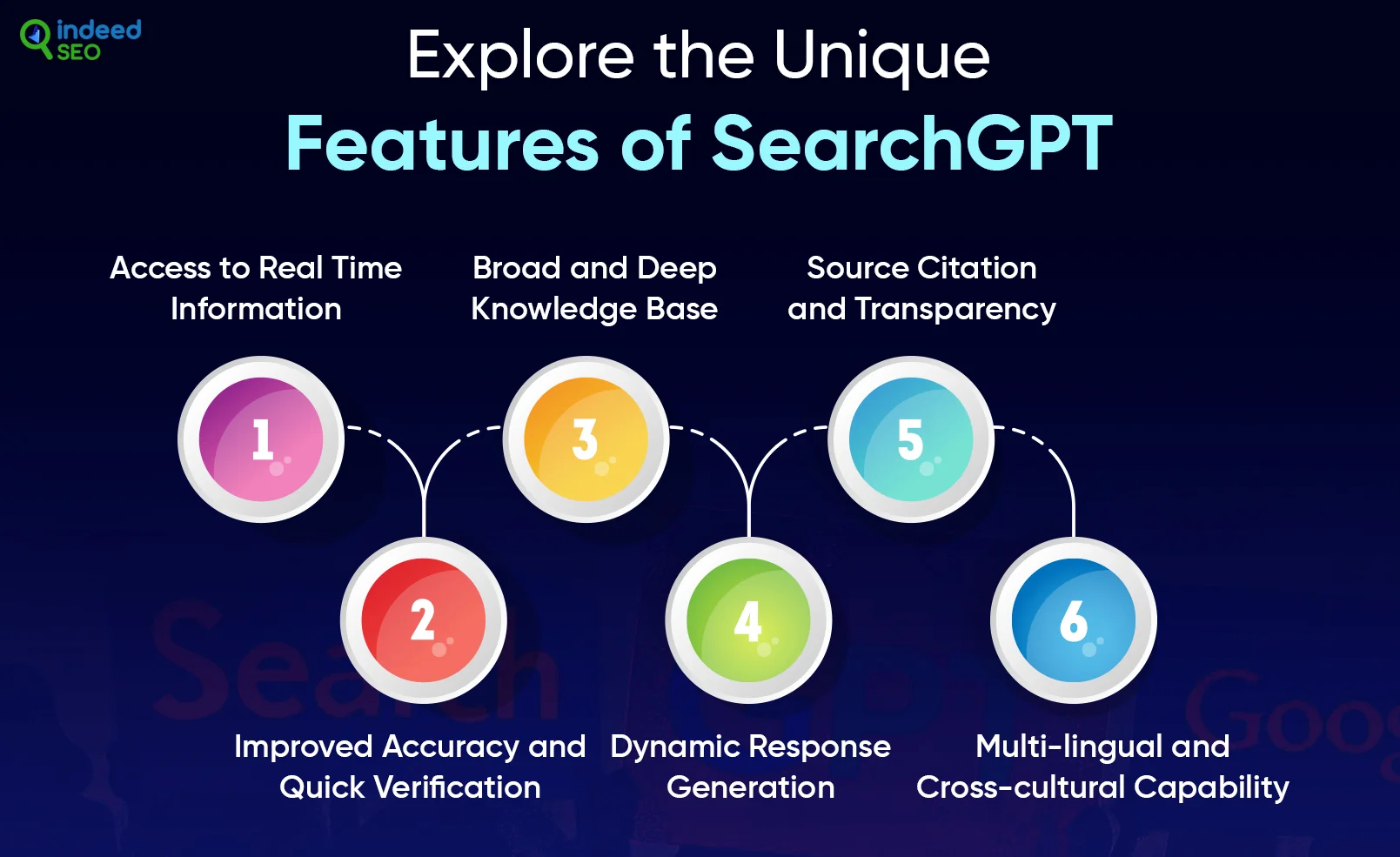
SearchGPT was OpenAI’s first public step into web search. Instead of typing keywords and scanning ten results, you asked a question in plain language, and it replied with a short answer, with links to the sources it used. You could ask a follow-up, such as “which of those is cheapest?”, and it understood the context.
OpenAI described it as a temporary prototype and said it was testing it with a small group of users and publishers. The idea was to learn from that test and then fold the useful parts into ChatGPT.
From SearchGPT to ChatGPT Search
| When | What happened |
|---|---|
| July 2024 | OpenAI announces SearchGPT as a prototype, tested with a limited group through a waitlist |
| Late 2024 | The search features are built into ChatGPT as ChatGPT search |
| Since then | Access has widened, and the features have kept evolving |
The standalone SearchGPT prototype is no longer offered separately. If someone talks about “SearchGPT” today, they almost always mean ChatGPT search. Our SearchGPT marketing service uses the old name, but it covers the same ground.
How ChatGPT Search Works
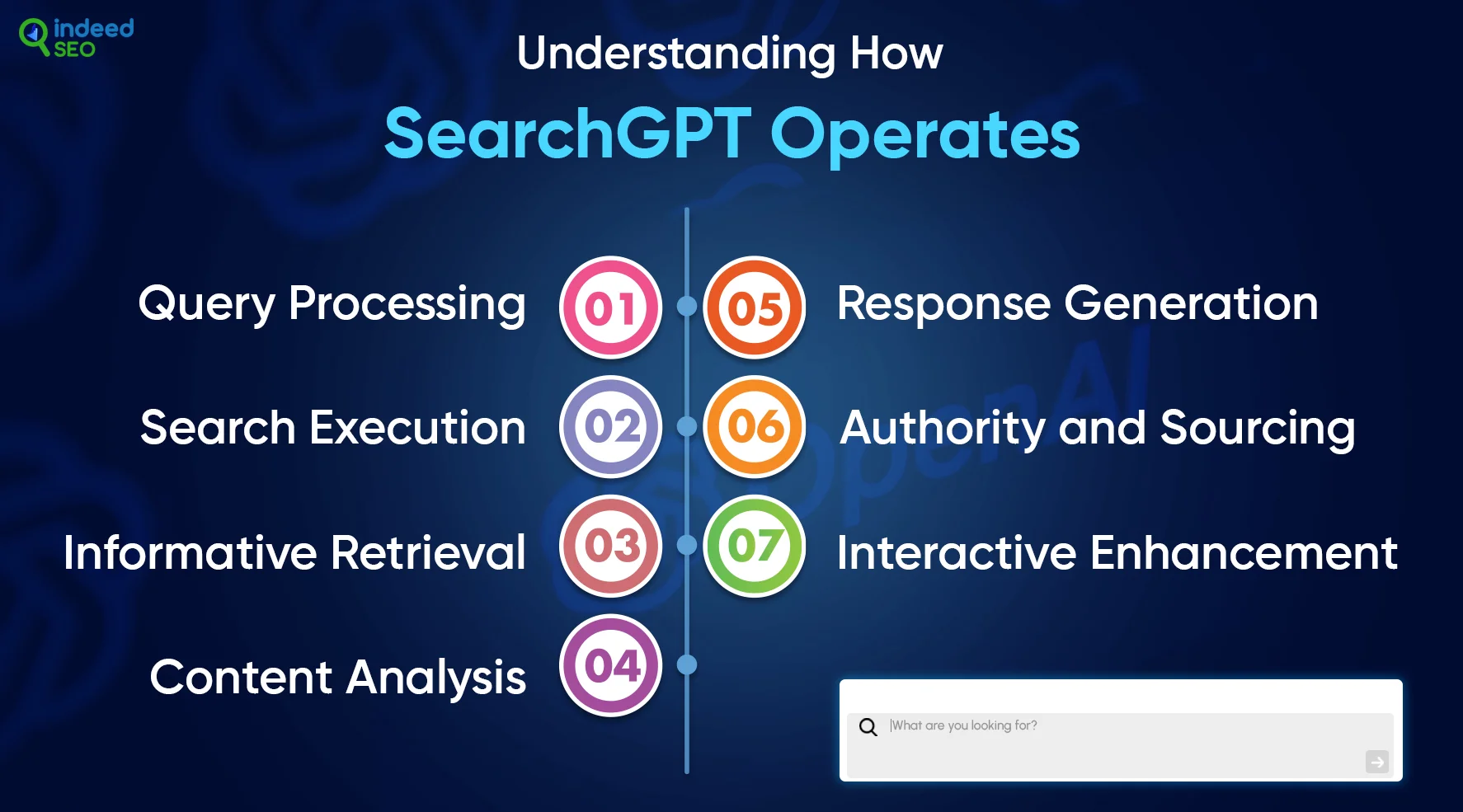
You don’t need to understand the technology to use it, but knowing the basic flow helps you see where your content fits.
- You ask a question. It can be as long or as conversational as you like.
- ChatGPT decides whether to search. For questions about recent or changing information, it looks at the web. For simpler questions, it may answer from what it already knows.
- It finds sources. It runs searches and pulls in relevant pages. OpenAI uses a crawler called OAI-SearchBot to surface websites in these results.
- It reads and compares. It reads the sources and pulls out the parts that answer the question.
- It writes an answer with citations. The reply summarizes what it found and links to the sources, so you can click through.
- You can follow up. It remembers the conversation, so you can keep refining.
ChatGPT Search vs Google vs Perplexity
| ChatGPT search | Perplexity | ||
|---|---|---|---|
| Main format | Ranked links, plus AI Overviews on some searches | Conversational answer with source links | Conversational answer with source links |
| Best for | Browsing, shopping, maps, local results | Explaining, comparing, research, follow-up questions | Research-style answers with visible citations |
| How you’re found | Rankings | Being cited as a source | Being cited as a source |
They overlap more every year, and none of them replaces the others yet. Many people use all three. If you want to know how your site shows up in each, our Perplexity SEO and Gemini SEO pages cover the others.
What Kinds of Questions Does ChatGPT Search Answer Best?
People tend to use it for questions that would normally take several searches:
- Comparisons: “What’s the difference between a dental implant and a bridge?”
- Recommendations: “What should I look for when hiring an SEO agency?”
- Research: “Summarize the pros and cons of electric cars for a small business.”
- Recent information: questions about news, prices or changes that happened lately.
- How-to steps: “How do I set up a Google Business Profile?”
If your customers ask questions like these, they’re the questions your pages should answer clearly. Notice that most are specific and conversational. That’s different from short keyword searches, and it’s why detailed, helpful content tends to do well here.
Myths vs Facts
Myth: SearchGPT is a separate search engine you can sign up for. Fact: It was a prototype. Its features now live inside ChatGPT search.
Myth: ChatGPT always searches the live web. Fact: It chooses when to search. Simple questions may not trigger a search at all.
Myth: There’s a secret trick to rank in ChatGPT. Fact: Nobody outside OpenAI knows the exact factors. What helps is being clear, trustworthy and easy to crawl.
Myth: You need to rank number one on Google first. Fact: Strong search visibility helps you get found, but AI tools also cite pages for answering a specific question well.
Myth: AI search means SEO is dead. Fact: AI search still relies on well-built, well-sourced web pages. SEO is the foundation for this, and the next layer is answer-focused content.
How to Get Your Website Cited in ChatGPT Search
This is the practical part. Optimizing for ChatGPT search is part of what’s called generative engine optimization (GEO) and answer engine optimization (AEO), and it builds on solid SEO.
1. Make sure it can crawl you. OpenAI recommends allowing OAI-SearchBot in your robots.txt file if you want your site to appear in ChatGPT search results. It also lists the bots it uses and how to control them. This is separate from GPTBot, which OpenAI uses for training, so you can manage them differently.
2. Put the answer first. Open each page and each section with a clear, short answer, then add detail.
3. Cover the full question. People ask long, specific questions. Write pages that answer the follow-ups too: costs, comparisons, steps and exceptions.
4. Keep content in plain HTML. Text hidden in images, PDFs or scripts is harder for crawlers to read.
5. Show real expertise. Name your authors, cite sources, add dates and show your credentials. Our E-E-A-T marketing services and semantic SEO work cover this.
6. Be consistent everywhere. Keep your business name, services and details identical across your website, Google profile and directories. For local businesses, our local SEO services help.
7. Fix the technical basics. Fast pages, clean structure and working links help every crawler. A technical SEO audit shows what to fix.
8. Track it. Check your key questions in ChatGPT every month, and watch for traffic from chatgpt.com in Google Analytics 4. Our ChatGPT for SEO page explains more.
If you’d like a team to handle this, see our AEO services, GEO marketing, LLM SEO and AI SEO services.
What This Means for Your Business
AI search won’t replace Google soon, but it adds a new place where customers find businesses. The brands that show up are the ones with clear, trustworthy content and consistent details. Small improvements to your pages today help you in both traditional and AI search.
Conclusion
SearchGPT was the start of a bigger shift: search that answers questions, not just lists links. The practical takeaway is simple. Make your site easy to crawl, answer real questions clearly and show why people should trust you.
If you’d like help getting your brand cited in AI search, talk to the IndeedSEO team for a free consultation.
Frequently Asked Questions
What is SearchGPT?
SearchGPT was an AI search prototype announced by OpenAI in July 2024. It gave conversational answers with links to sources, and its features were later built into ChatGPT as ChatGPT search.
Is SearchGPT still available?
Not as a separate product. Its features now live inside ChatGPT search.
Is SearchGPT the same as ChatGPT search?
In practice, yes. ChatGPT search is the feature that came out of the SearchGPT prototype.
How does ChatGPT search work?
It decides whether a question needs a web search, finds and reads relevant pages, then writes an answer with links to its sources. You can ask follow-up questions in the same conversation.
Is ChatGPT search free to use?
Access and limits change over time, so check OpenAI’s current plans for the latest details.
How do I get my website into ChatGPT search?
Allow OAI-SearchBot in your robots.txt file, publish clear, well-sourced answers to real questions, keep your details consistent and build overall authority.
Is ChatGPT search better than Google?
They suit different jobs. Google is strong for browsing, shopping and local results, and ChatGPT search is strong for explanations, comparisons and follow-up questions.
How do I track traffic from ChatGPT?
Look for visits from chatgpt.com in Google Analytics 4, and test your key questions in ChatGPT each month to see whether your site is cited.