+1 (917) 565-8527

 info@indeedseo.com


As SEO takes time to show results, app store optimization takes time and effort. And when it comes to mobile apps. When it comes to mobile apps, organic growth is only accomplished after some time.
To get on the right path to success, app store optimization needs hard work and consistency. If you are unable to figure out what to track, then there is no need to worry. Here, you will get a guide on measuring the success of your app store optimization efforts.
However, in the active mobile ecosystem, change is constant. The users evolve, the competition upgrades their products, and the algorithms change. It’s like running just to keep up with the pace of running, and taking a (small) step back now and then is how you keep up with it. WatchingKPIs allows the app to dance gracefully with the changing tides, always aligned with the moving beat.
Steps to Monitor The Success Of Your App Store Optimization Efforts
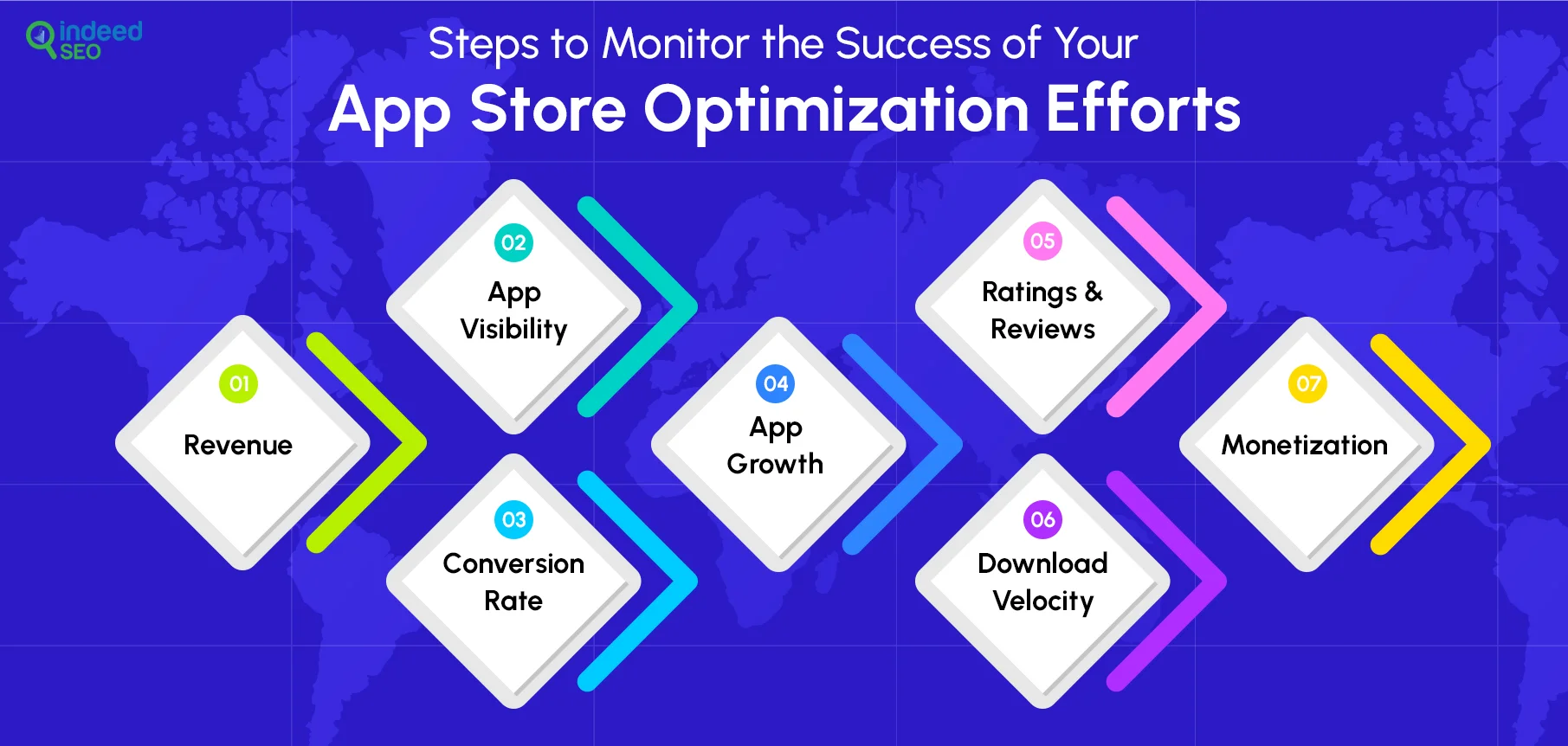
App store optimization increases your app’s visibility so that it can be found by more users. This also includes increasing the app conversion rate to get more users to install it. You may also employ some functions of the numbers to know if your ASO works well.
- App Visibility
- Conversion Rate
- App Growth
- Ratings & Reviews
- Download Velocity
- Monetization
- Revenue
▶ App Visibility
Users have to find your app before they can download it. You want your target audience to find your app in the Apple store rankings or keyword searches. The more prominent your app is, the higher the likelihood of it being downloaded by people.
The ASO KPIs you can measure are:
✅ Keyword Rankings
Your app’s position on the search results page for your target keywords and combinations. The better keywords your app ranks for, the more its visibility. One thing to keep in mind is to target keywords with adequate search volume.
✅ Top Charts Rankings
The Apple Store has three top charts: free, paid, and gross. Be sure to follow your app’s position in these graphs.
✅ Category Rankings
This is where your app ranks in its category, such as productivity or education. It demonstrates how appropriate your app is to competitors.
✅ Similar And Related Apps
Many users find unique apps through these devices on the App Store. You like learning how many apps and which ones link to yours.
✅ Featured
Don’t forget to make a note of when you get featured on the App Store front page. Having your product page traffic boosted a lot, obviously.
Track visibility-related KPIs regularly and compare them across countries, monitor your app ranking against your competitors, and use ASO techniques to improve your ranking as well!
▶ Conversion Rate
Realize that only some people who visit your app’s page will download it. However, what is considered an acceptable conversion rate? This can vary, but improving this metric can significantly impact your user base.
✅ Measuring Conversion Rate
Apple and Google define conversions differently. Understanding these differences can help create a more customized optimization strategy.
✅ Strategies For Improvement
Outstanding visuals, clear descriptions, and highlighting unique app features can increase conversions. Additionally, actively addressing user feedback can help build trust, encouraging hesitant individuals to take the plunge.
▶ App Growth
More metrics are needed to measure the absolute number of downloads and users. Is it growing or slowing down with time? Mobile growth is a critical indicator of your app’s success. There are two methods to estimate mobile app growth.
✅ Number & Velocity Of Installs
The quantity of installations is the fundamental KPI that can be monitored within the App Store’s developer console. Monitoring this KPI and comparing the rise in installations over a specific period will indicate the rate or pace of your growth.
✅ Number Of Active Users
Paid advertising campaigns may influence the number of installs directly or indirectly. They can bring you traffic to your product page, raise your branded searches, and also help your app to rank higher on top charts and search results, so they will increase your visibility and discoverability.
▶ Ratings & Reviews
Ratings and reviews summarize users’ feedback and can make or break an app. An app with 5-star ratings can propel downloads, while a slew of negative reviews can dampen even the most aggressive marketing efforts.
✅ The Domain Effect
An app’s ranking in the app store is directly affected by the reviews and ratings it receives. A higher ranking leads to more visibility, which means more downloads from potential users and more ratings and reviews. This creates a positive cycle of heightened visibility and increased downloads.
✅ Users Trust
App ratings are one of the most crucial factors influencing whether or not customers download an application. Featured reviews can help customers make decisions. In this case, negative reviews with no answer can ensure the conversion rate is maintained.
✅ Acting And Feedback
Remember to treasure negative reviews, as they provide valuable feedback. By addressing unhappy users promptly and improving based on the feedback, you can turn unhappy users into loyal brand advocates.
▶ Download Velocity
This is a statistic that is usually less promoted compared to the number of downloads, but that also greatly influences an app’s ranking on the store. The higher the keyword velocity, the better the rank of the app for the keyword, which means more impressions, more downloads, and eventually more money.
▶ Monetization
You can make money from your app through payments for its download, for subscriptions included within, via advertising, or sales of in-app purchases.Use some of these KPIs to know if your monetizing approach is thriving:
✅ Revenue
This is the total revenue generated from the app, ads, in-app purchases, fees, and subscriptions.
✅ Average Revenue Per User (ARPU)
This is one of the most essential and should always be higher than the users’ acquisition cost.
✅ Lifetime Value (LTV)
You also have the potential to get revenue from the same user during their app usage.
App store optimization plays an important role in effective app monetization, as it enables you to attract users who are capable of making in-app purchases. Monitoring these monetization KPIs can give insighintoon which users the app should attract, where they should be sourced from, and which influencing elements to use.
▶ Revenue
Though estimating the revenue volume of organic downloads can be challenging, revenue is still a vital metric that ASO managers should monitor. One can increase the total number of impressions and downloads, but still have no revenue growth because of targeting “non-paying users” or low-revenue markets.
Conclusion
The success of an app is the tricky dance of development, design, good app store optimization, and listening to user feedback. Analyzing theASO metrics and KPIs, developers and marketers can develop strategies to improve visibility and have long term success in the evolving mobile environment.
If you need advice on how to get better results from your marketing efforts featuring ASO in your marketing mix, talk to IndeedSEO and allow our ASO specialists to assist you.
FAQs
Q1: How long does ASO take to show results?
A: ASO usually shows visible results within 4–8 weeks, depending on competition and consistency.
Q2: Which KPIs matter most in ASO?
A: Keyword rankings, app visibility, conversion rate, downloads, ratings, and revenue are the key ASO KPIs.
Q3: Why is conversion rate important for ASO?
A: A higher conversion rate means more installs from the same app store traffic.
Q4: How do ratings and reviews impact ASO?
A: Better ratings improve trust, rankings, visibility, and overall download performance.
Q5: Can ASO help increase app revenue?
A: Yes, ASO attracts high-intent users who are more likely to spend in-app.