+1 808 999 0096

 info@indeedseo.com

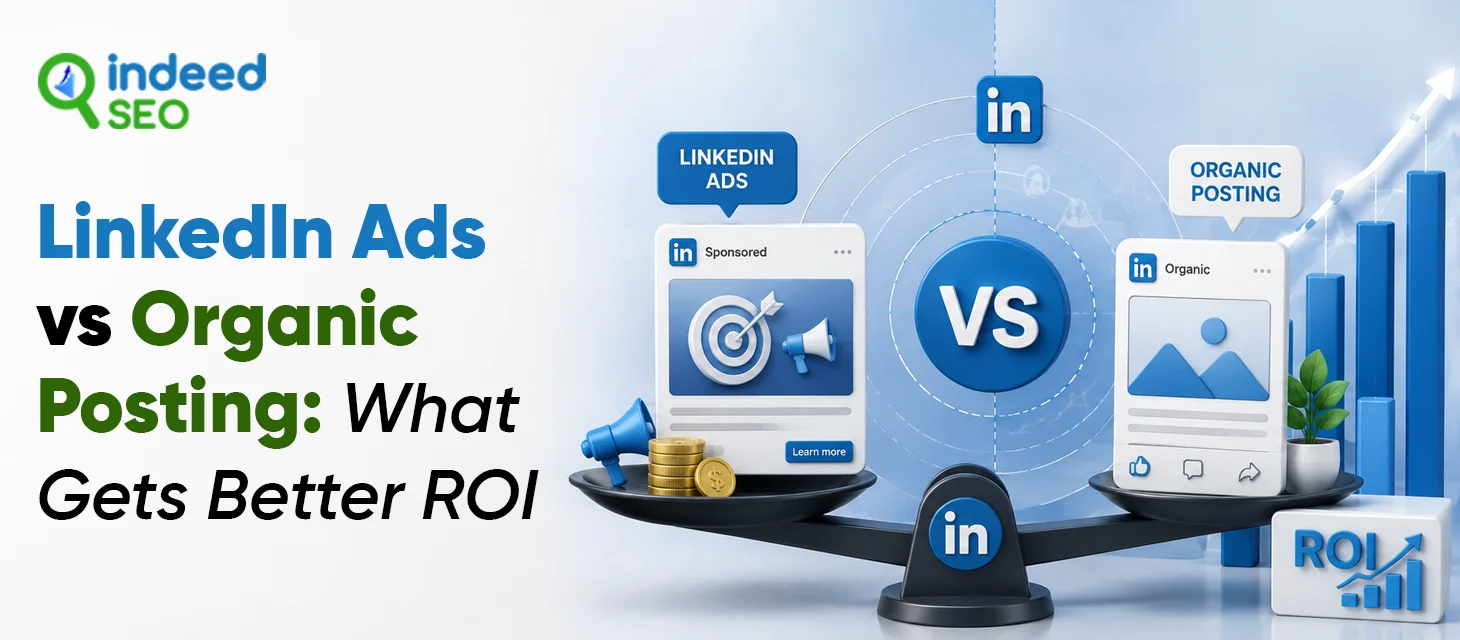
Choosing between LinkedIn Ads vs Organic Posting depends on your business goals and marketing budget. Paid LinkedIn ads deliver instant market visibility and help generate immediate leads, while organic posting builds market trust and authority for online business growth. For brands targeting better ROI (Return on Investment), the most effective approach is to combine LinkedIn Ads with organic posting.
Top marketing agencies like IndeedSEO help brands understand scope and use both paid ads and organic posting strategies to build a strong market presence.
In this blog, let’s understand LinkedIn Ads vs organic posting: which strategy delivers the best ROI for a growing business.
Maximize Your ROI With Targeted LinkedIn Ads and Organic Marketing From IndeedSEO
What are LinkedIn Ads
LinkedIn Ads are paid digital advertisements used by businesses to reach a professional audience on the platform. Advertisers target users with keywords related to job titles, industries, and brands, making this a primary platform for business-to-business (B2B) marketing, lead generation, and recruitment.
Main Ad Formats Used
Professional agencies like IndeedSEO use top LinkedIn Ads formats such as:
- Sponsored Content: Native ads are directly visible in a user’s feed. These include images, video, and carousels for business events and promotions.
- Sponsored Messaging: These are direct messages sent to a targeted user. Brands can connect with users in their LinkedIn inbox.
- Dynamic Ads: These are personalized sidebar advertisements. Such ads automatically adapt using a user’s profile details.
- Text Ads: Simple, budget-friendly pay-per-click blocks located on the desktop interface
What is Organic Posting
Organic posting is the method of publishing content on LinkedIn manually without paying for promotions. The main aim of organic posting is building credibility and relevance in the market and improving brand presence. Instead of directly selling a product in every post, brands can share useful insights, case studies, and user reviews about their products and services.
Key Elements of Organic Posts
Brands working with the organic posting method must understand its key elements, including:
- The Hook: A strong opening line or visual. The hook is used in the first three seconds to stop the scroll.
- Value Delivery: The content must have useful tips, stories, or entertaining ideas. It helps users engage with the ads.
- Visuals: It includes high-resolution images and videos. Organic posts include visuals such as photos, videos, or carousels.
- Call to Action (CTA): A CTA is a direct marketing message. It is used to motivate users to convert. CTAs prompt users to comment, share, or click a link.
- Discoverability: The ad copy must have targeted keywords, tags, and relevant hashtags. These content strategies help new users find the post.
LinkedIn Ads vs Organic Posting: Overview Table
| Factor | LinkedIn Ads | Organic Posting |
|---|---|---|
| Distribution | Paid | Unpaid |
| Audience reach | Targeted audience reach | Depends largely on existing network and content distribution |
| Budget | Requires advertising spend | No direct media cost |
| Audience targeting | Detailed targeting options | Less direct targeting control |
| Speed | Faster visibility | Usually builds gradually |
| Content lifespan | Depends on campaign settings and budget | Can continue receiving engagement after publishing |
| Lead generation | Strong for dedicated campaigns | Depends on content and audience engagement |
| Brand building | Supports controlled awareness campaigns | Strong for ongoing brand presence |
| Testing | Easy to test creative, audiences, and offers | Organic engagement can provide content insights |
| Best use | Demand generation and targeted reach | Authority, engagement, and relationship building |
Key ROI Metrics to Track for LinkedIn Ads Performance
If you want to track measurable results from LinkedIn Ads management services, understanding the following metrics is essential.
Click-Through Rate
CTR is the frequency with which users click the ads.
CTR = Clicks ÷ Impressions × 100
A stronger CTR helps marketers understand that their targeted message was right for the audience. It is not directly linked to ROI, as an ad may attract clicks but may not attract qualified leads.
Cost Per Click
CPC is the amount that is spent by marketers for every click.
CPC = Total Ad Spend ÷ Total Clicks
CPC can help a brand understand its investment criteria, but it must be measured alongside conversion and lead quality.
Cost Per Lead
CPL is a useful strategy for lead-generation campaigns.
CPL = Total Ad Spend ÷ Number of Leads
A low CPL is profitable for businesses. However, brands must focus on accurate audience targeting to benefit from qualified lead generation. If unqualified leads are more prominent in the business, it will not benefit from a low CPL.
Cost Per Qualified Lead
The cost to generate qualified leads helps to improve profitability. Qualified leads are useful and indicate a successful campaign.
Cost Per Qualified Lead = Campaign Spend ÷ Qualified Leads
This metric only includes important leads and ignores vague leads that do not have any buying intent.
Return on Ad Spend
ROAS is the metric to understand the revenue generated from the cost spent on ads.
ROAS = Revenue Attributed to Ads ÷ Ad Spend
However, B2B businesses with longer sales cycles should also monitor pipeline value rather than relying only on immediate revenue.
Key ROI Metrics to Track for Organic Posting
If you want to track measurable metrics for Organic Posting, understanding the following is a must.
Engagement Rate
Engagement is measured when users interact with your post. It can include reactions, comments, reposts, and clicks. A strong engagement rate indicates that your content is enjoyable or informative for users you are targeting. However, it does not directly relate to revenue. A post with multiple reactions may generate fewer business opportunities, which does not help with business growth.
Website Traffic
This metric helps marketers track their website or social media traffic. Brands can use tools and measurement parameters to identify which posts and campaigns generate visits and create similar strategies to support growth.
Profile Visits
An increase in profile visits can indicate growing interest in the brand or its content. This is particularly useful for professional companies where users engage with the platform for more content.
Leads and Conversions
Organic posting can also generate inquiries and leads that need nurturing for conversions. A person may not convert directly from a post but may interact with several pieces of content before submitting an inquiry.
This is why businesses should support users throughout the customer journey to improve ROI.
LinkedIn Ads vs Organic Posting: Which Gets Better ROI?
Organic posting generally yields a higher percentage return on investment (ROI). Organic Posting has a lower cost per lead ($164 for organic posts and $310+ for ads), but LinkedIn Ads deliver faster, hyper-targeted leads. The right comparison depends on:
| ROI Factor | LinkedIn Ads | Organic Posting |
|---|---|---|
| Direct media cost | Yes | No |
| Reach control | High | Lower |
| Speed of exposure | Fast | Gradual |
| Lead generation | Highly measurable | More indirect |
| Cost per lead | Can be calculated directly | More difficult to attribute |
| Audience targeting | Strong | Limited |
| Content testing | Fast | Slower but useful |
| Brand credibility | Supports visibility | Strong opportunity for expertise |
| Long-term value | Depends on continued spend | Content can continue generating value |
| Best ROI objective | Targeted acquisition | Brand and relationship building |
How to Achieve the Best ROI: Combining LinkedIn Ads and Organic Posting
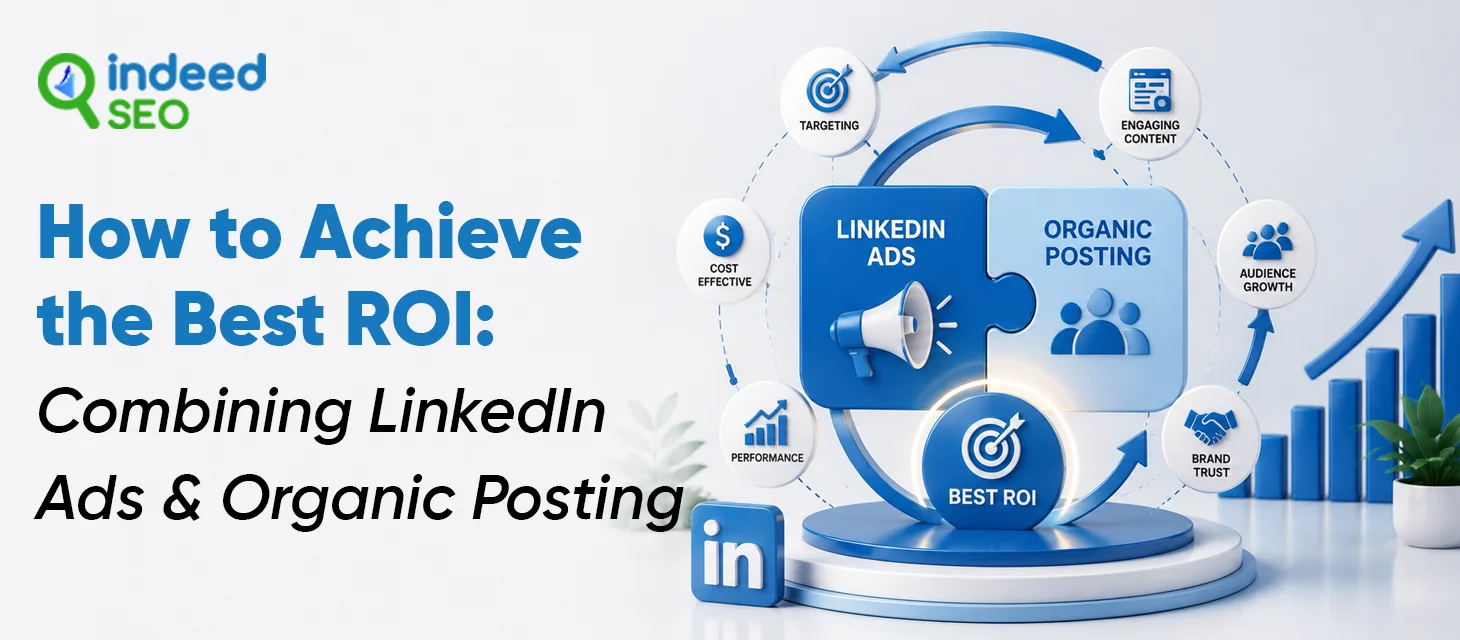
Organic content can build trust and test messaging, whereas paid campaigns can amplify its results with direct audience targeting. This combined strategy creates a strong approach that uses organic posting and ad promotion to improve business visibility and presence in the market. Let’s understand how you can use both to improve your ROI.
The right approach depends on the business objective. Before choosing a strategy, align it with your business goals.
| Business Goal | Recommended Approach | Reason |
|---|---|---|
| Generate leads quickly | LinkedIn Ads | Paid distribution can reach a defined audience quickly |
| Build thought leadership | Organic posting | Consistent expertise supports brand authority |
| Promote a webinar | Ads + Organic | Organic builds interest while ads extend reach |
| Launch a new service | Ads + Organic | Paid campaigns create reach while organic content builds context |
| Build executive visibility | Organic posting | Personal expertise can strengthen trust |
| Reach specific companies | LinkedIn Ads | Paid targeting supports account-focused campaigns |
| Test content themes | Organic posting | Audience response can reveal useful topics |
| Scale a proven offer | LinkedIn Ads | Paid distribution can expand reach |
| Support long B2B sales cycles | Ads + Organic | Prospects receive both targeted offers and educational content |
| Build long-term brand presence | Organic posting | Consistent content creates an ongoing presence |
Maximize Your ROI With Targeted LinkedIn Ads and Organic Marketing From IndeedSEO
Conclusion
Wondering whether to choose LinkedIn Ads or organic posting for better ROI?
IndeedSEO helps businesses develop focused best LinkedIn marketing services and organic content strategies. Our experts aim to improve your business visibility, attract qualified users, and generate high return on investment to support long-term business growth.