+1 808 999 0096

 info@indeedseo.com

Social media platforms have become popular marketing channels for modern businesses looking to engage with customers. Amongst multiple SMM strategies, influencer marketing offers one of the best returns on investment for brands across industries. However, to do influencer marketing on a small budget, businesses must focus on nano- and micro-influencers (1,000 to 50,000 followers) with high engagement rates.
Professional marketing agencies like IndeedSEO execute this by offering simple and cost-effective strategies such as trading free product samples for content, setting up affiliate commission codes, and reusing top-performing posts for paid social ads. Let’s understand how to perform influencer marketing on a small budget.
Launch Your Influencer Marketing Campaign With IndeedSEO Today
What is Influencer Marketing?
Influencer marketing is a social media marketing strategy in which businesses partner with influencers to promote their brands. These social media influencers have dedicated online followings, helping the brand gain significant exposure. Influencers help with better product reach by directly recommending products to global audiences.
Core Influencer Marketing Strategies for Small Businesses on a Budget
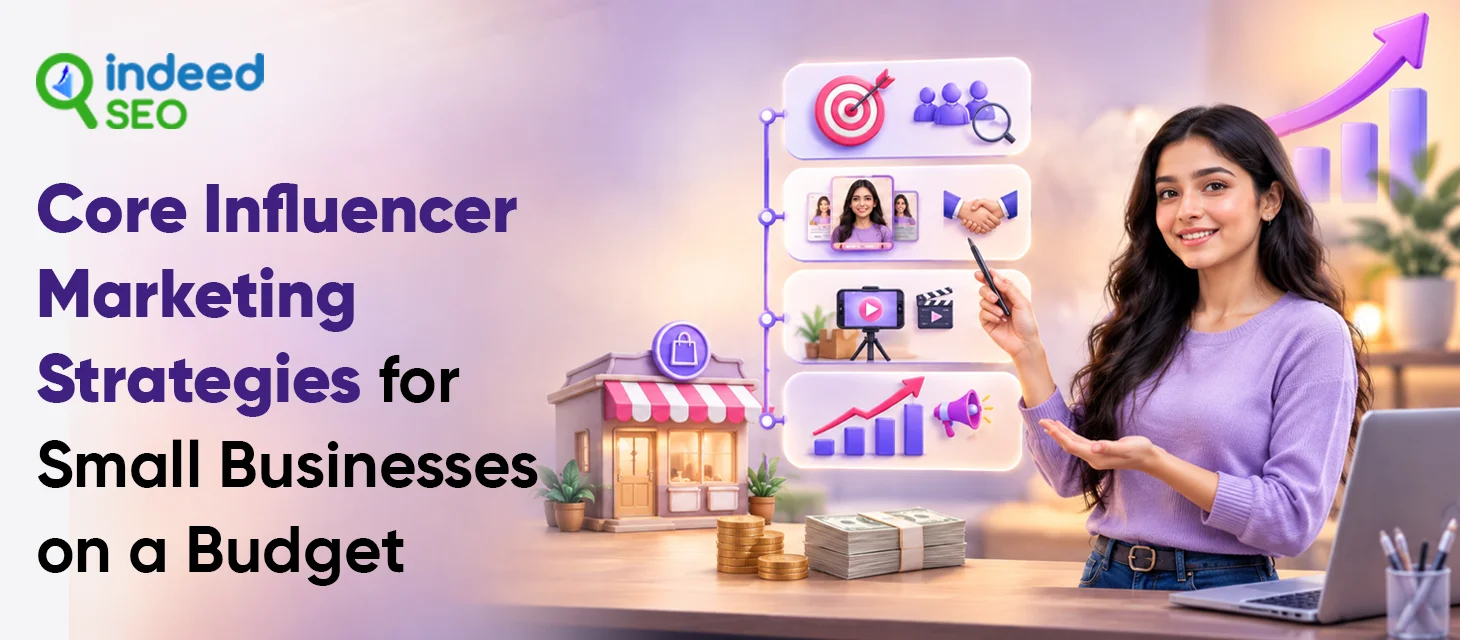
To run influencer marketing on a small budget, professional digital marketing agencies like IndeedSEO follow targeted strategies. Core strategies that can be managed under a small budget include:
Target Nano and Micro-Influencers
Working with small creators is a great start to offer your brand exposure. Nano influencers (1,000 to 10,000 followers) and micro influencers (10,000 to 100,000) have small but focused and loyal audiences that can improve a brand’s conversion rates. These creators are more useful because their promotions feel natural and personal.
The smaller creators may offer:
- Lower collaboration costs
- Stronger niche relevance
- More direct audience interaction
- Flexible content arrangements
- Opportunities for longer partnerships
Pro Tip: Always check for an influencer’s engagement before making a decision. Follower count can be manipulated, so brands need to check for actual audience interactions.
Use Cost-Efficient Compensation Models
Businesses can offer multiple cost-effective payment methods to stay under their budget while partnering with any influencer. Some of the most effective compensation models include:
Trade Products for Posts (Gifting)
Product gifting is one of the most common partnership compensations. Brands can trade their products or services to creators for their posts and promotions. However, a free product doesn’t guarantee a post.
Set Up Affiliate and Commission Deals
Affiliate Management operates as a clear path to keep social media creators actively sharing your products online. Marketing teams can generate unique creator discount codes, set up automatic profit-tracking links, and calculate performance commission rates. This simple bonus setup keeps influencers highly motivated over time, helping your company by driving sales.
Hybrid compensation
Brands can use a smaller fixed payment with sales-based commission and free products. This helps to create a long-term partnership with the influencers. This model suits multiple influencers, improving your chances of paid promotions.
Repurpose Content and Leverage UGC
With the right permissions, your business can reuse creator content across your own marketing channels. It can act as a client testimonial and improve your content reach. This User-Generated Content can help brands run multiple ads on the content and benefit from global marketing.
Before reposting, clarify with the creator whether your brand can:
- Repost the content organically
- Use it in paid advertisements
- Edit or crop the content
- Publish it on your website
- Use it for a specific period
- Use it across different platforms
Pro Tip: Make clear agreements to protect your business rights and creators’ rights.
Track Core Performance Metrics
When businesses run campaigns under a budget, managing and checking where the costs are being used is essential. Focusing on core metrics can help you understand your opportunities and lost costs for better future collaborations. Use the following metrics to track campaign performance.
| Goal | Metrics to Track |
|---|---|
| Awareness | Reach, impressions, video views |
| Engagement | Comments, shares, saves, engagement rate |
| Traffic | Link clicks, sessions, click-through rate |
| Leads | Form submissions, sign-ups, cost per lead |
| Sales | Purchases, revenue, conversion rate |
| Content | Content produced, usage value, ad performance |
Step-By-Step Guide: How To Do Influencer Marketing on a Small Budget
To run an influencer marketing campaign on a small budget, follow these steps:
1. Target The Right Influencers
Start with nano and micro creators. Ensure your brand finds creators in its niche to connect naturally. To assess a creator, check their recent views, comments, shares, and audience engagement rates to understand their performance. Don’t rely only on followers.
2. Choose Budget-Friendly Compensation Models
Assess your budget and then try to find out the right compensation model and fees for your influencer partner. You can choose from product gifting, affiliate commissions, or direct fee payment methods to start your content creation. Calculate your partnership fee based on the type and quantity of content the creator is willing to provide you. It can range from pictures, videos, reels, or stories.
3. Set a Realistic Budget
Decide how much you want to spend on a campaign based on the budget decided before. Consider costs for product samples, shipping, commissions, and paid promotion.
A simple budget could look like this:
| Campaign Cost | Marketing Budget |
|---|---|
| Creator compensation | 50% |
| Free products or samples | 20% |
| Content usage and promotion | 15% |
| Tracking and campaign tools | 10% |
| Contingency | 5% |
4. Conduct Personalized Outreach
Avoid sending the same pitch to every creator. Create an outreach pitch and link how your product fits their audience. Keep the message clear and offer attractive compensation. A short, genuine message is usually better than a long sales pitch.
5. Set One Clear Campaign Goal
Start with one campaign objective. A clear goal helps prevent unnecessary spending. Your campaign goals can include better sales, visibility, or awareness.
Your campaign objectives must follow this route:
Awareness campaign → Engagement campaign → Traffic campaign → Leads campaign → Sales campaign
6. Define Your Target Customer
Do not choose influencers before deciding who you want to reach. Target the right audience for your campaign to improve conversion rate.
Consider your customer’s:
- Age range
- Location
- Interests
- Spending habits
- Lifestyle
- Common problems
- Preferred social platforms
Finalize the right market to launch your campaign to keep your audience targeted.
7. Launch Your Campaign
Launch your campaign and let creators make authentic content that fits their audience. Give every creator a unique discount code to help identify product page and website traffic and engagement from each collaboration.
8. Repurpose Winning Content
Do not let good content go to waste after one post. With the right usage, strong videos and photos can be used for multiple promotions. Pay attention to which content gets the best response. If one creator’s video generates strong clicks or sales, use it regularly for paid campaigns.
How to Find the Right Influencers Without Overspending
Find high-impact influencers instead of expensive celebrities. Start by searching the social platforms where your customers spend time.
Look at:
- Relevant hashtags
- Competitor collaborations
- Industry keywords
- Customer-created content
- Local creators
- Niche communities
- Existing brand mentions
When reviewing a creator, check their content for consistent engagement and genuine conversations. Also review their previous brand partnerships. If every post is a sponsored promotion, their audience may not like more promotional content.
Launch Your Influencer Marketing Campaign With IndeedSEO Today
Conclusion
Want to reach more customers without overspending on influencer marketing?
IndeedSEO can help your business build a focused influencer marketing strategy that reaches the right audience and supports your growth goals. From influencer research to campaign execution, our team manages your budget wisely, delivering high ROI on every campaign.