+1 808 999 0096



Subdomains for SEO – While building a website, technical decisions shape your SEO effectiveness. Subdomains are a key element for domain strength. Some companies might wonder about the use of subdomains. It might sound small, but this technicality can shape how fast your website grows.
Many site owners use subdomains without fully understanding their impact. To cater to your queries, this is your complete guide on the role of subdomains for SEO, and whether businesses should use them for better results.
What is a Subdomain?
A subdomain is a prefix added to your domain. It is a section of your website that is before your main domain name.
Examples:
- Main website: indeedseo.com
- Blog subdomain: support.indeedseo.com
- Store subdomain: shop.indeedseo.com
It is a part of the URL that helps to specify your query.
Win Search & AI Rankings with IndeedSEO – Start Now
URL Structure
| Protocol | Subdomain | Second Level Domain | Top Level Domain | Path Page |
|---|---|---|---|---|
| https:// | careers. | indeedseo | .com | /developer |
Subdomain vs Subfolder: What’s Better for SEO?
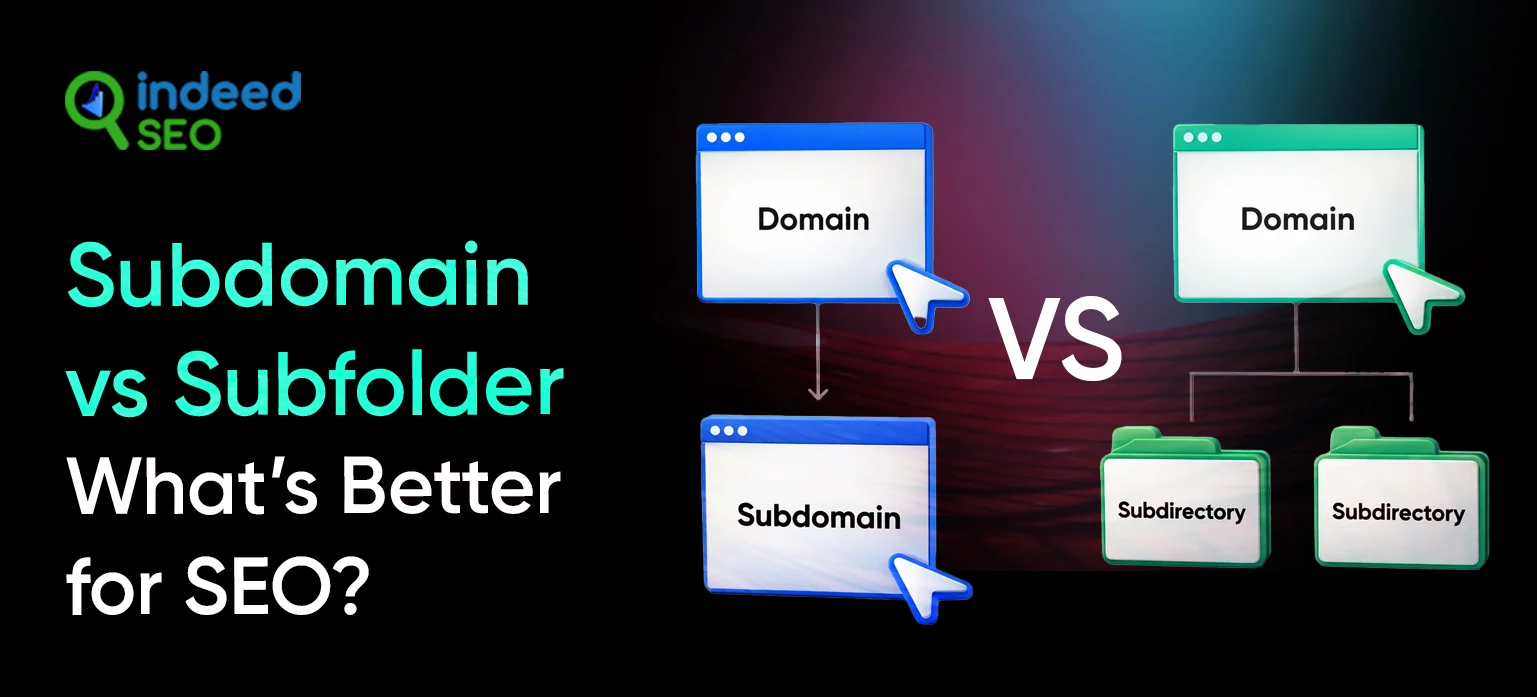
For most websites, subfolders and subdomains hold equal importance. To users, both feel similar, but for search engines, they behave differently.
A subfolder keeps all your content under one strong domain. It helps your pages rank faster and share authority. This structure is ideal for blogs and service content. It helps to rank the content faster with shared authority.
Subfolder Example: indeedseo.com/blog
Subdomains need more SEO focus to grow. They are useful for large or technical platforms to improve SEO rankings. These are better for large-scale technical or complex websites.
Subdomain Example: blog.indeedseo.com
How Search Engines Treat Subdomains
Google has clearly stated that subdomains are often treated as separate entities.
What this means for SEO:
- Backlinks don’t fully pass automatically
- Authority is not instantly shared
- Rankings grow at a different pace
Yes, there is a connection between a subdomain and the main site. However, SERP doesn’t reward them equally by default.
Example of real-world brands that use subdomains successfully
- Google: It has multiple service-based subdomains.
- HubSpot: It has its blog on a subdomain.
- Shopify: It uses subdomains for help and support.
Benefits of Using Subdomains for SEO
Subdomains are not an unnecessary domain extension. In the right situation, they can be very effective. It helps with:
-
Clear Content Separation
If your website has a wide range of content, subdomains help keep things clean. It can help you reach multiple audience types with different content categories.
For example:
- Main site for services
- Subdomain for documentation
- Subdomain for a web application
This clarity helps users and developers alike.
-
Efficiency with Large or Technical Websites
Enterprise sites, SaaS products, and global platforms often rely on subdomains. They allow teams to scale without breaking the core website.
-
Technical Freedom
Subdomains allow you to:
- Use different CMS platforms
- Host on separate servers
- Apply unique security rules
This flexibility is valuable when your site grows complex.
-
Strong New Service Branding
Some subdomains deserve their own identity, like a community or a support portal. In such cases, separation can feel more natural than forced integration.
Are Subdomains Beneficial for SEO?
A well-defined subdomain can be beneficial for SEO. However, subdomains also come with a set of SEO struggles.
-
Slower SEO Growth
New subdomains often behave like new websites. That means:
- Slower keyword rankings
- Longer indexing time
- More SEO effort upfront
-
Authority Gets Divided
Instead of building one strong domain, you’re building two or more. This can weaken your overall SEO if resources are limited.
-
Extra Management Work
Each subdomain needs:
- Separate tracking
- Separate optimization
- Separate performance monitoring
For small teams, this can become exhausting.
When Should We Use Subdomains
Subdomains are a smart choice only when there’s a strong reason behind them.
Use subdomains if:
- Your content serves a different purpose
- You run a SaaS product or web app
- You manage a large enterprise site
- You need technical independence
If you decide to use subdomains, ensure you:
- Interlink subdomains with your main site
- Build backlinks for the subdomain
- Submit separate XML sitemaps
- Keep branding consistent
- Avoid duplicate content
- Track SEO performance independently
When You Should Avoid Subdomains
Avoid them if:
- Your website is small or medium-sized
- You want faster organic growth
- Your blog supports your core business
- You rely heavily on SEO traffic
In the above cases, subfolders almost always perform better.

Conclusion
Subdomains are not the best choice for every website. Though they are used for fast SEO, they also help businesses specify their content for user ease. The right structure depends on your content type and growth plans. If you want an expert to help you with your SEO decisions, IndeedSEO can guide you with clarity. We are a team of top SEO experts who deliver your brand a clear strategy and real results.